ALEXIS MABILLE HAUTE COUTURE SS26
The Ghost in the Machine: Alexis Mabille’s AI Couture Revolution
The gilded atmosphere of the Lido theater is usually reserved for the tangible: the rustle of silk, the scent of perfume, and the rhythmic click of heels. However, for Spring/Summer 2026, Alexis Mabille shattered the traditional couture glass ceiling. In a move that left the front row stunned, the French couturier presented a collection that didn’t technically “exist” at least, not in the physical world.
A Digital Mirage in the Heart of Paris
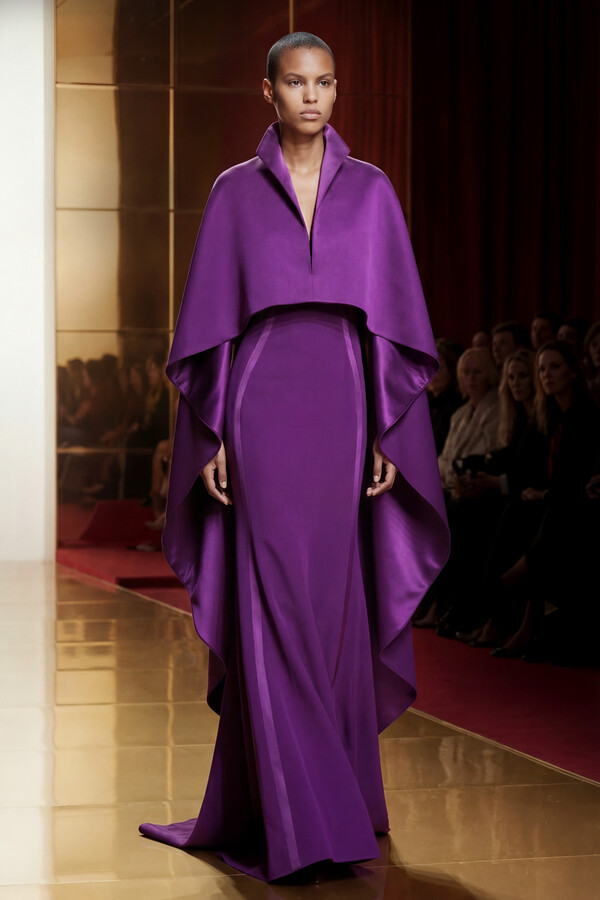
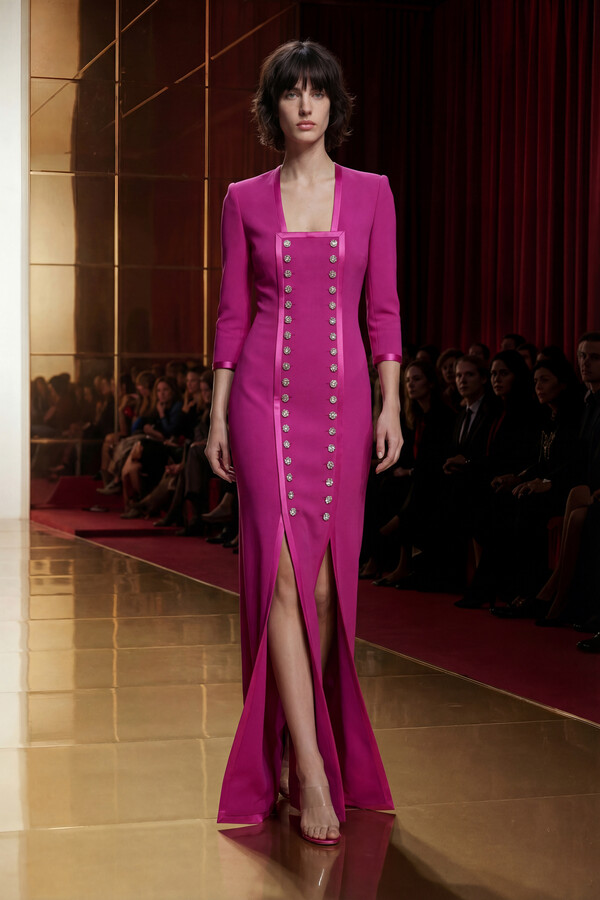
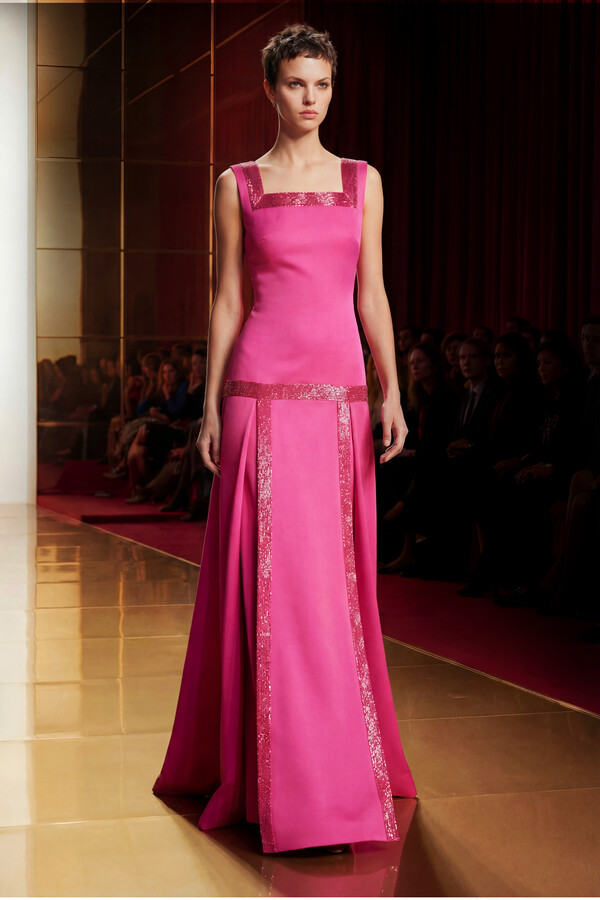
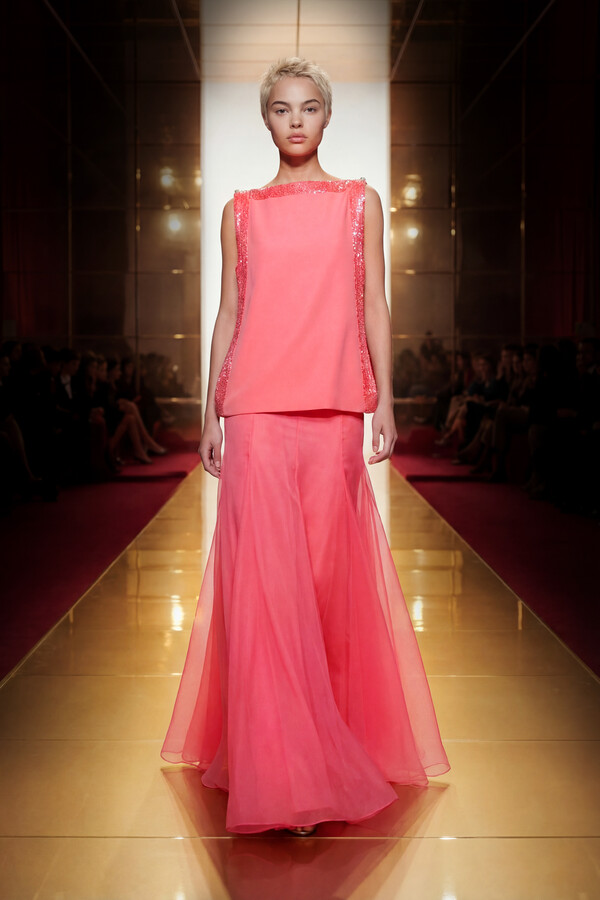
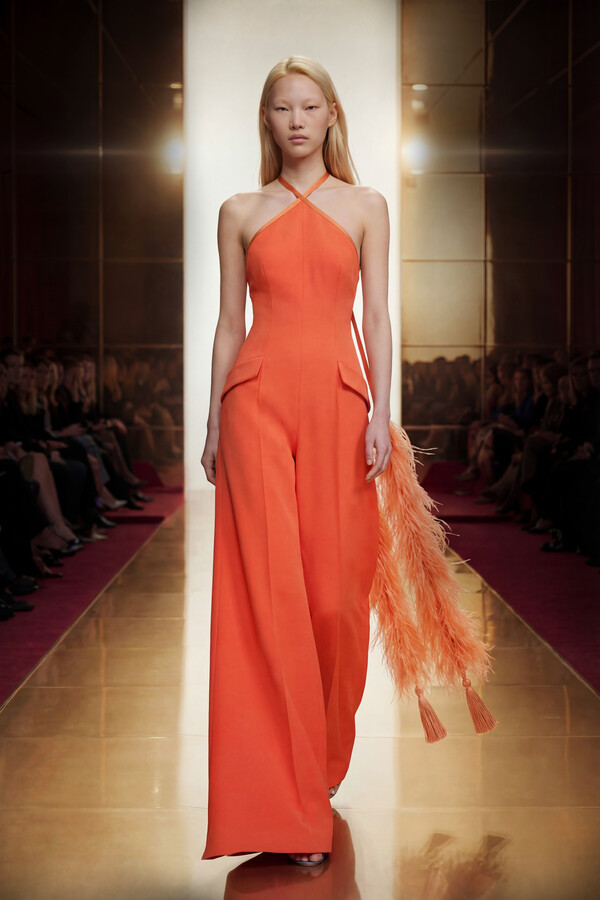
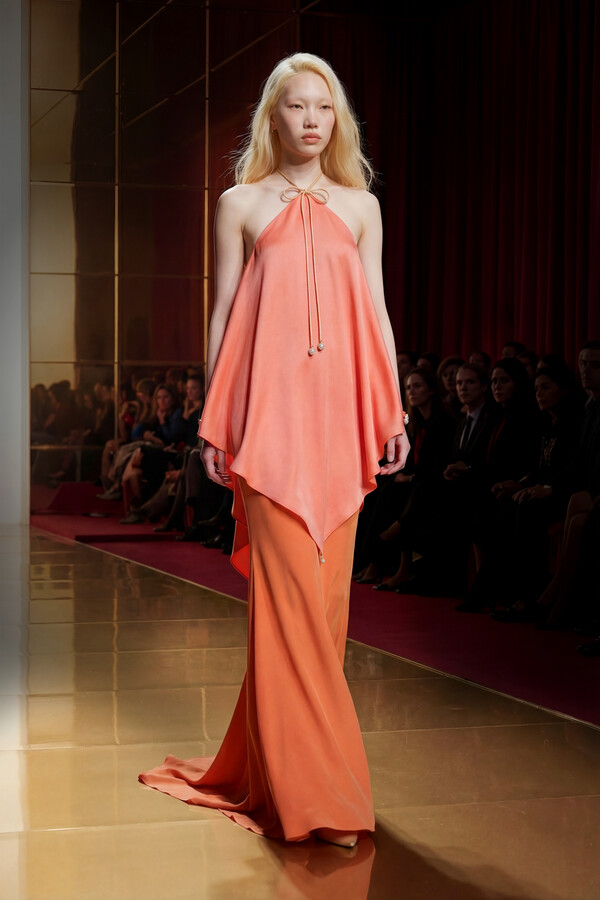
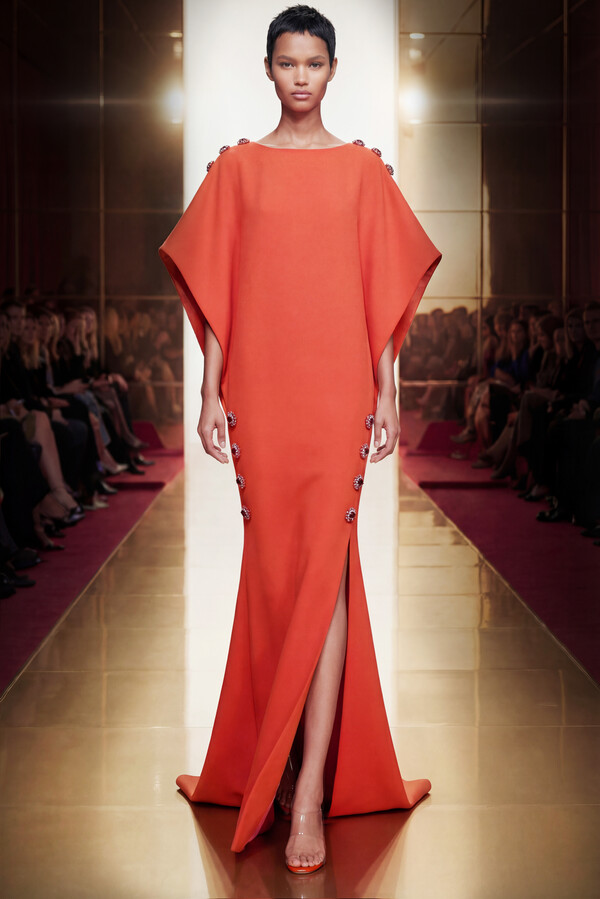
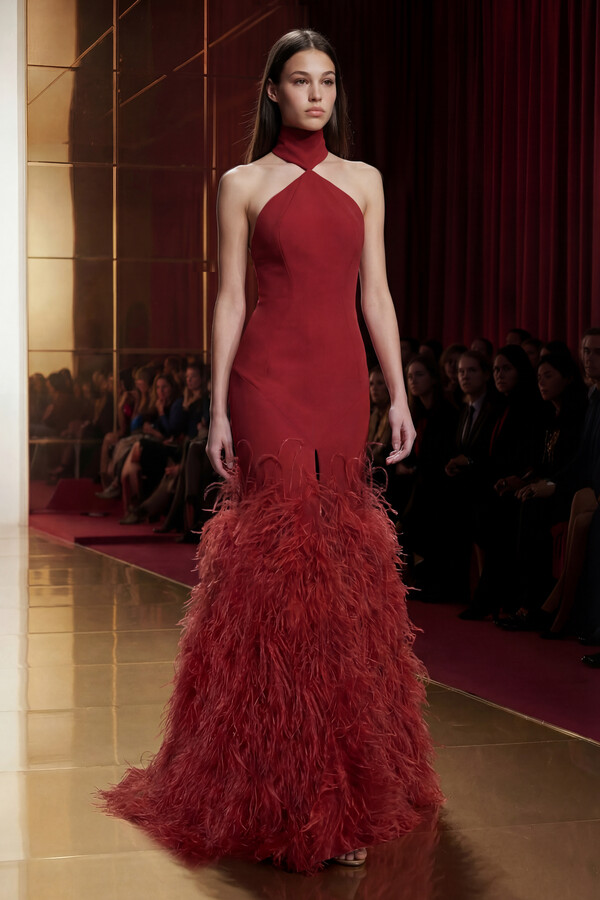
As the lights dimmed, attendees found themselves surrounded by towering, wraparound screens. Larger-than-life figures drifted across the digital canvas, draped in garments of staggering detail. What many initially assumed was a high-tech prologue soon revealed itself to be the main event. There were no racks of clothes backstage, no frenzied model changes, and no physical fabric. This was the first time a major couture house has used Artificial Intelligence as the sole medium for both creation and presentation.
Crafting the Algorithm
Mabille is quick to defend the “soul” of the project. Far from using AI as a lazy shortcut to generate random imagery, he treated the technology as a new apprentice in his atelier. Working alongside the French digital studio Glor’IA, the designer spent months “training” the AI to understand his specific DNA.
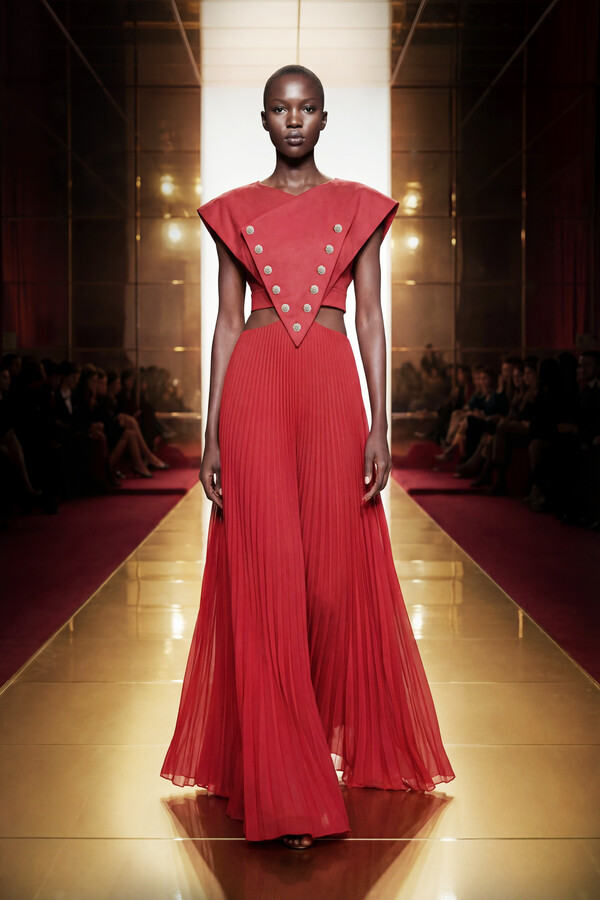
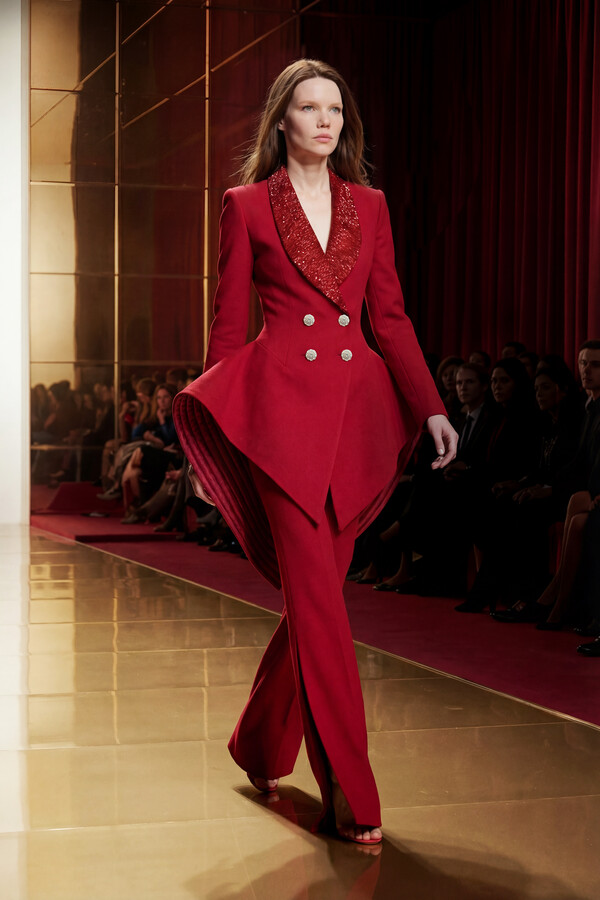
The results were hauntingly realistic:
- Architectural Silhouettes: Elongated red crepe frock coats with shawl collars that looked hand-embroidered.
- Athleisure-Couture: Fluid tracksuit-dresses in blush pink, featuring drawstrings that caught the light like genuine jewels.
- The Micro-Detail: Collars rendered with the specific, iridescent sheen of micro-pearls—a level of zoom-in detail rarely captured on a traditional runway.
The Human Heart of the Code
Despite the high-tech delivery, Mabille infused the show with deeply personal sentiment. The digital “casting” featured a digital reimagining of his longtime friend Diana Gartner to open the show, while the final “walk” was performed by a virtual version of Mabille’s own mother, Mireille. By digitizing those closest to him, Mabille successfully counterbalanced the coldness of the computer screen with a layer of human intimacy.
Innovation Over Economy
For those skeptical of the shift, Mabille clarified that this wasn’t a cost-cutting exercise. The resources typically spent on venue logistics and model casting were instead redirected into a massive technical team. The designer noted that the learning curve was steep, requiring constant retraining of the AI to ensure the digital fabric behaved with the weight and gravity of real-world textiles.
The Verdict: Is It Still Couture?
The show left Paris with a lingering question: Can couture exist without the touch of a hand? While the garments were immaterial, the intent was pure couture. Mabille confirmed that physical toiles (prototypes) are already being constructed in his studio, proving that the digital show was a “parallel stage” of the creative process rather than a replacement for it. In an era where fashion is searching for its next identity, Alexis Mabille didn’t just show us clothes—he showed us a laboratory of the future. Whether the industry is ready to follow him into the machine remains to be seen.
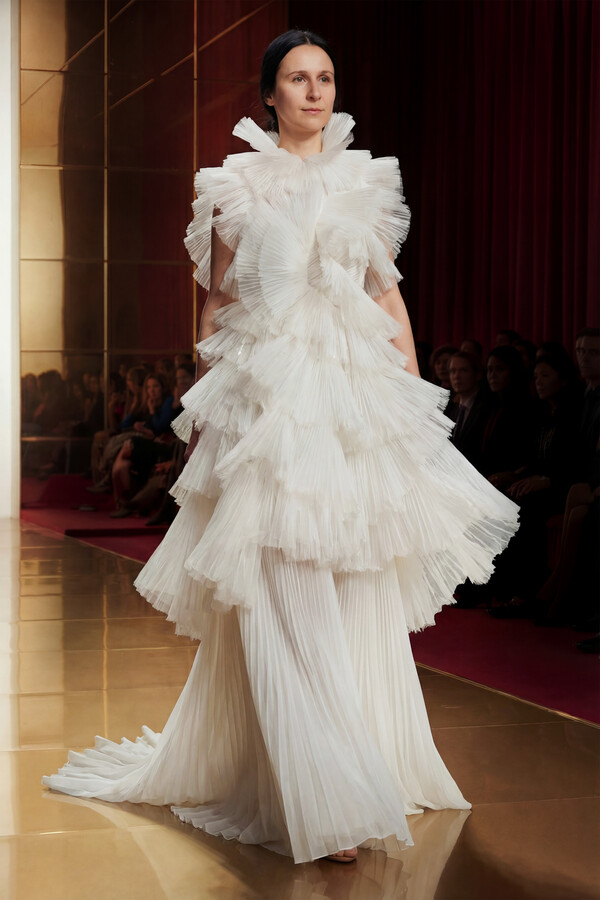
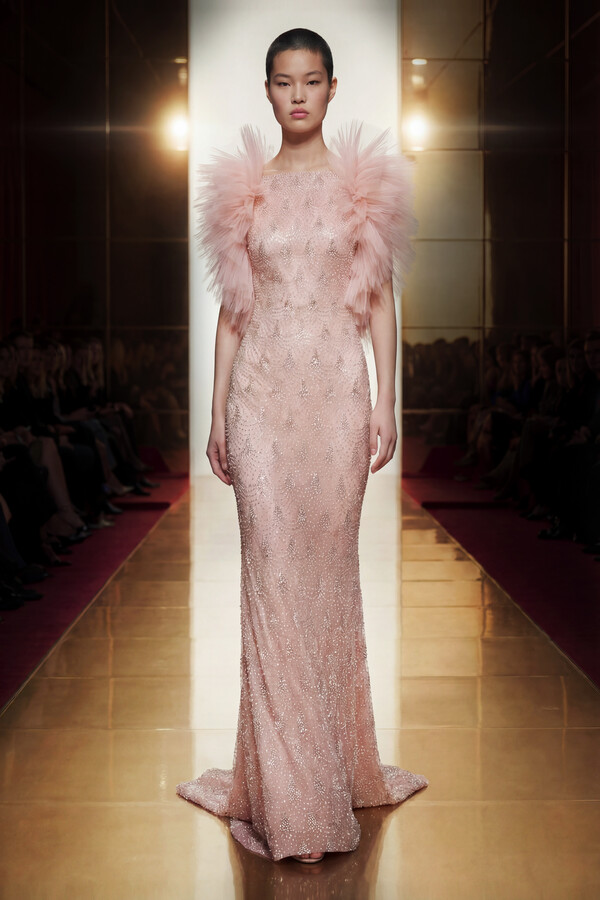
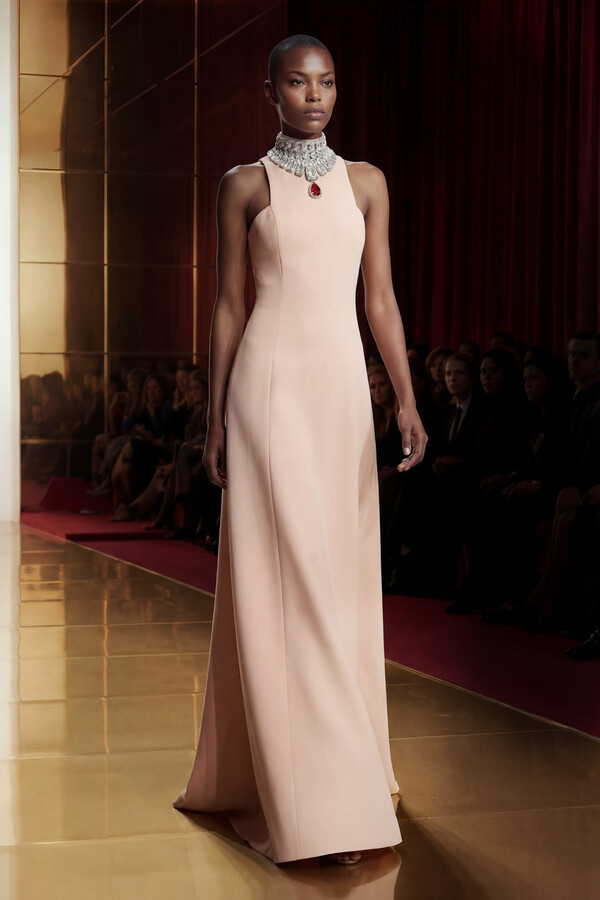
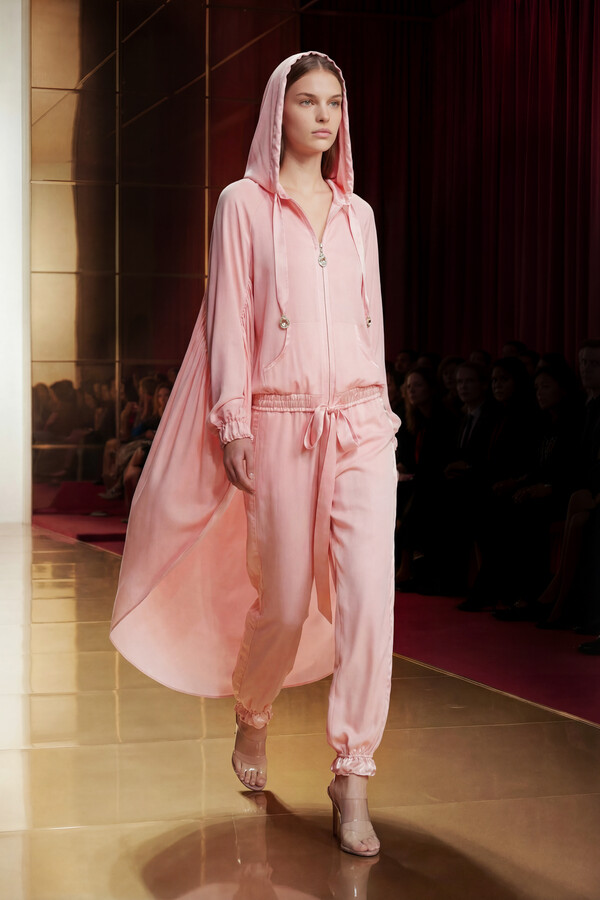
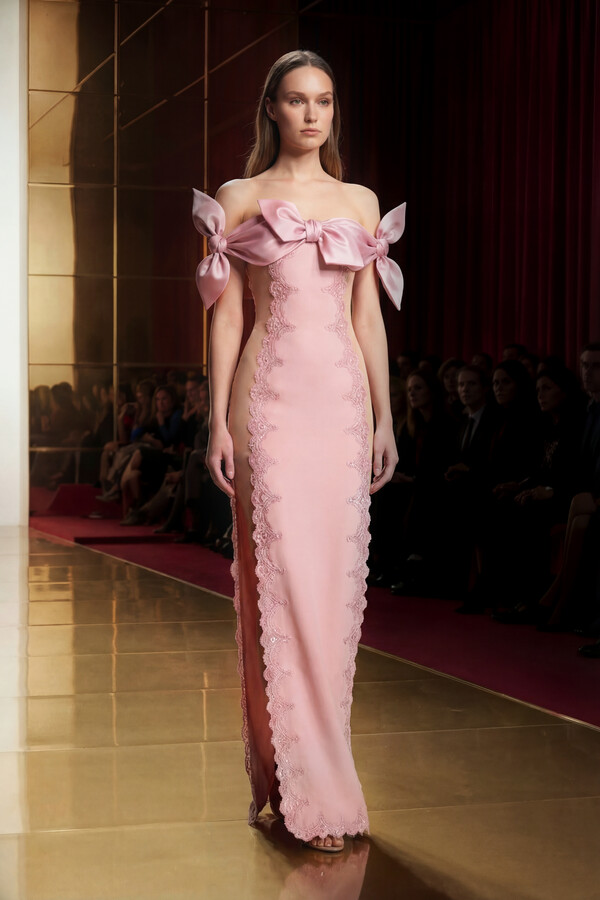
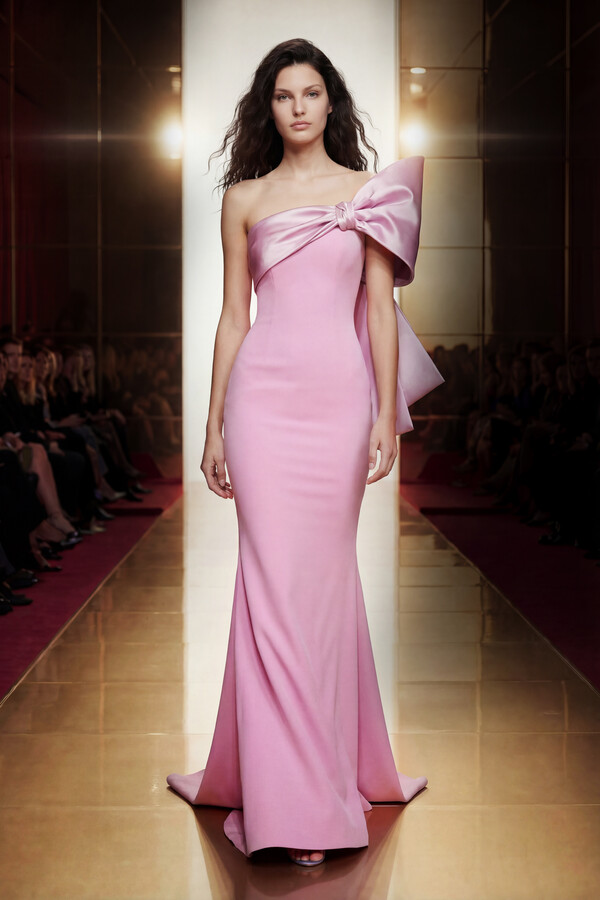
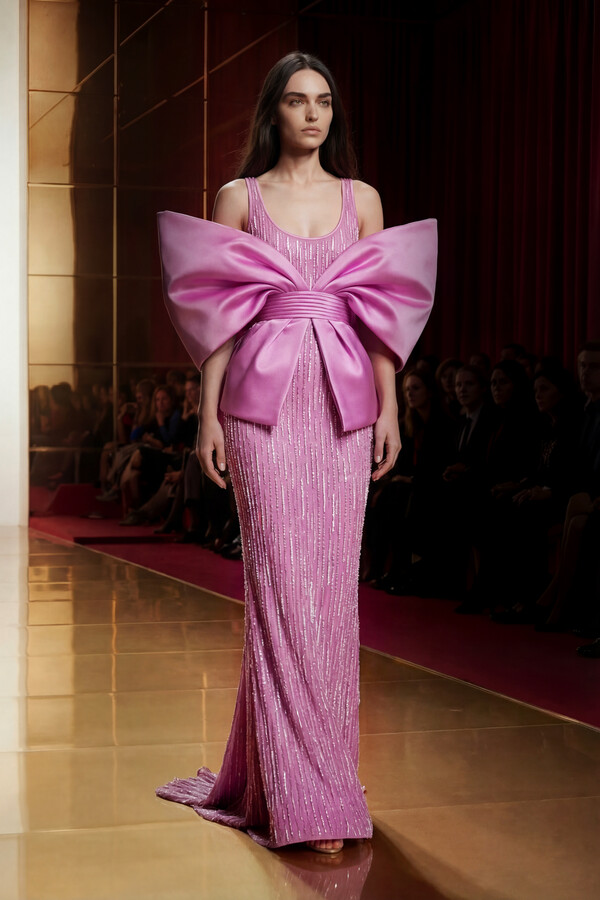
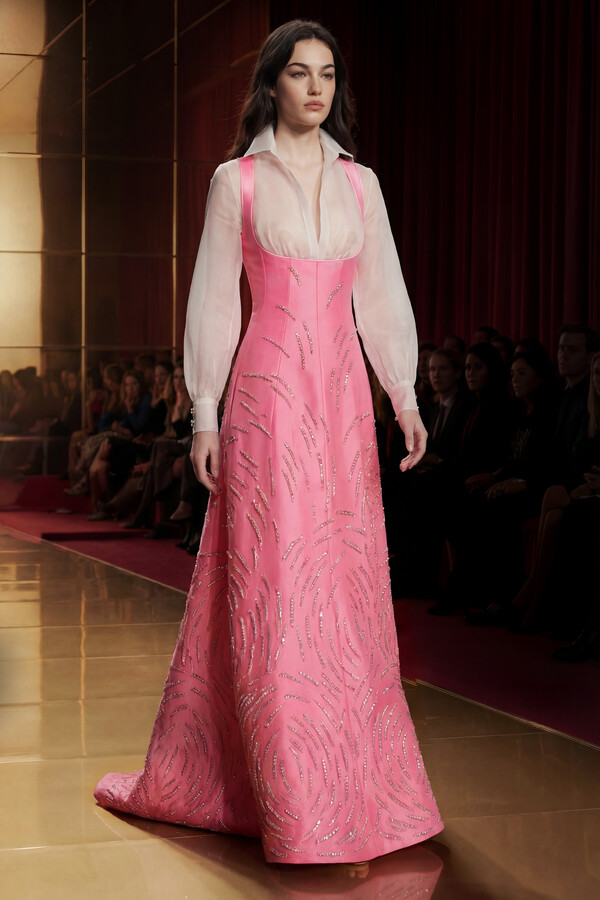
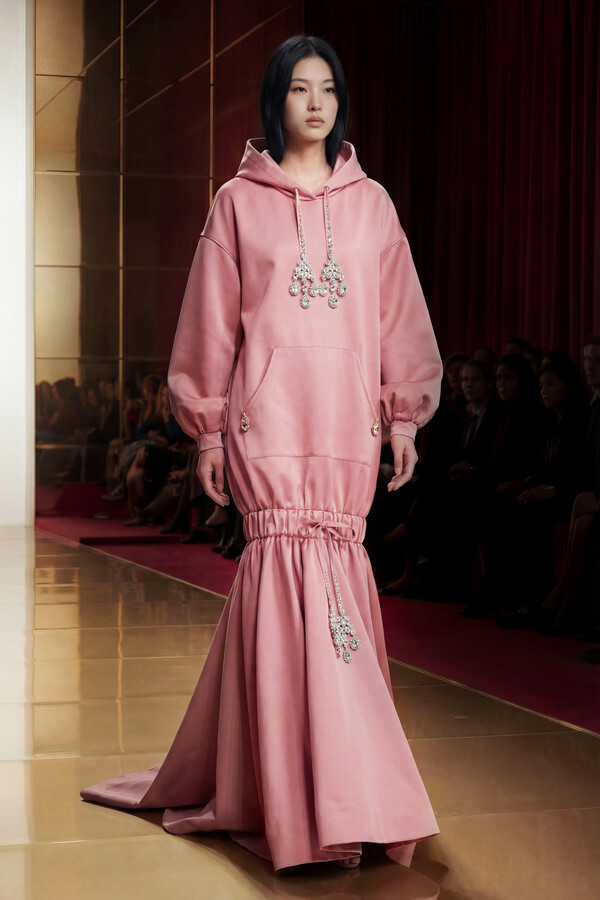
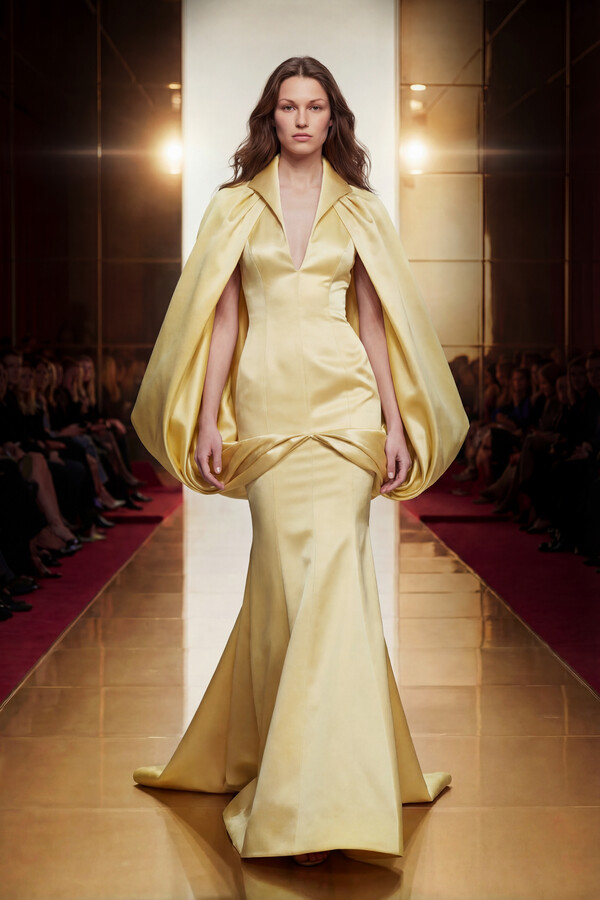
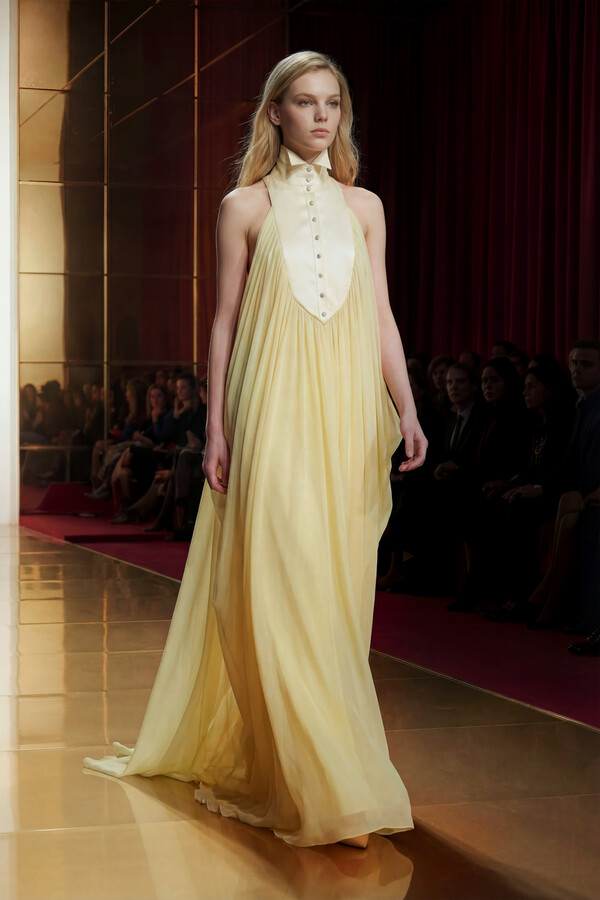
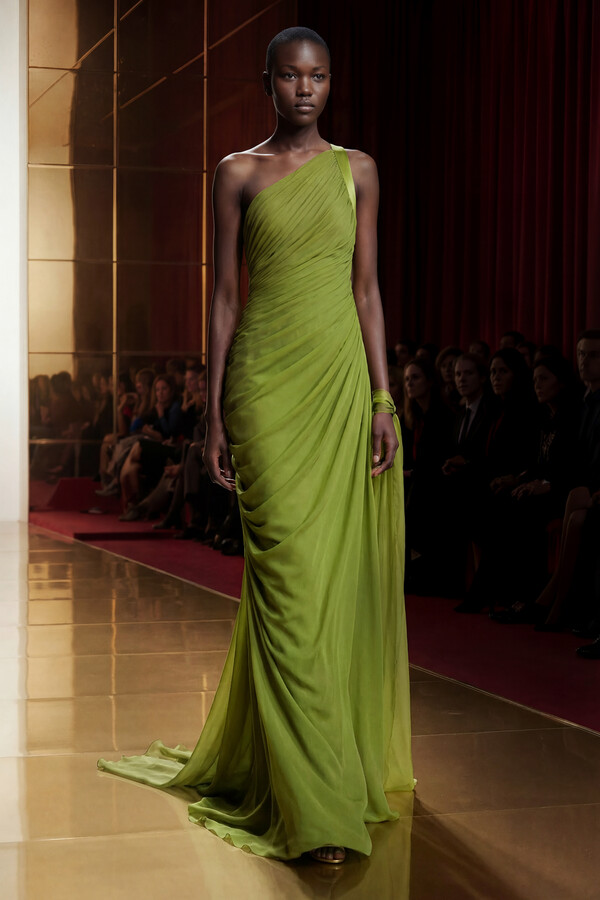
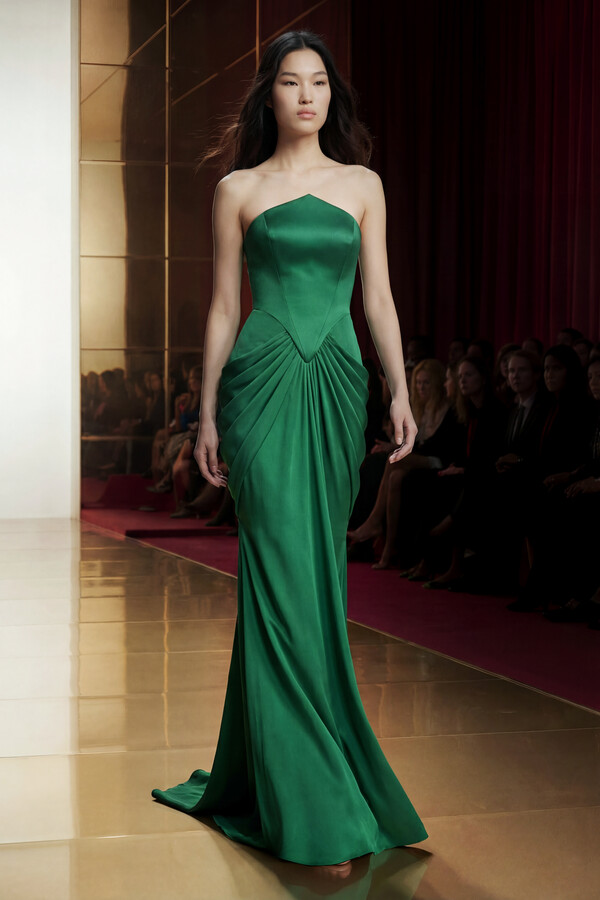
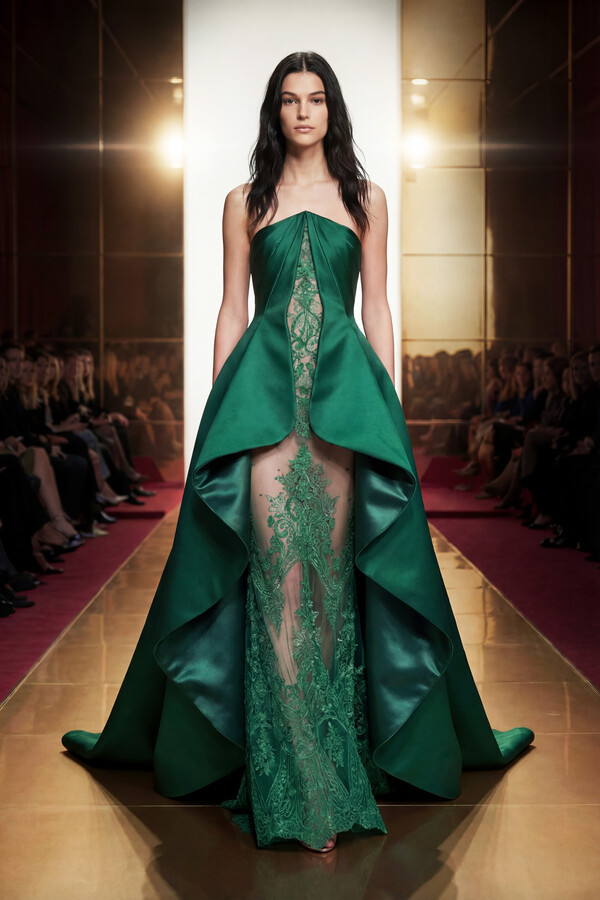
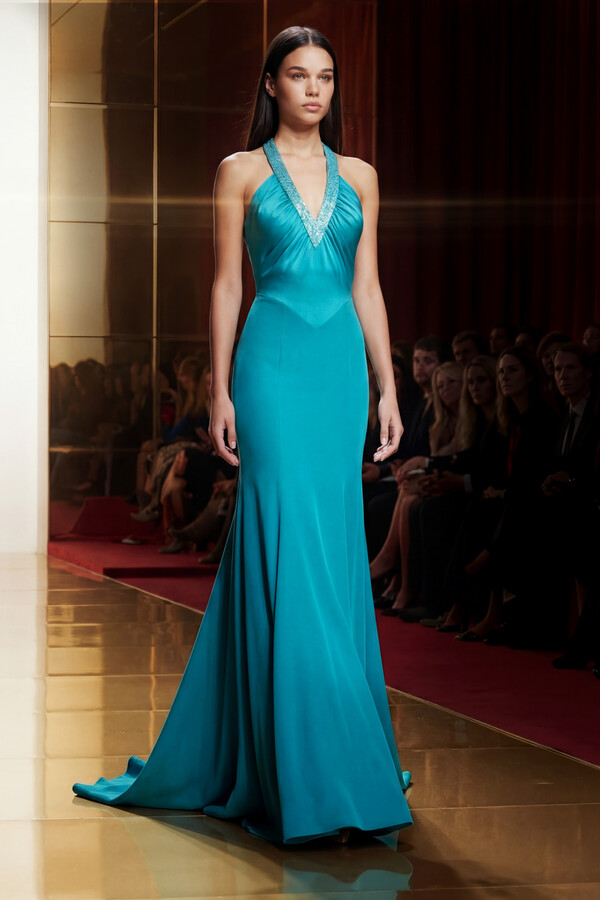
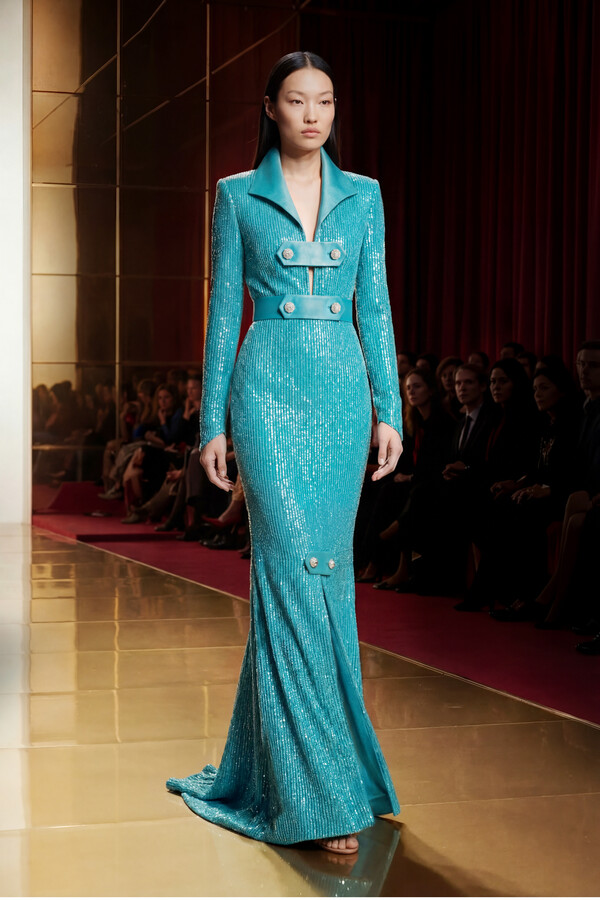
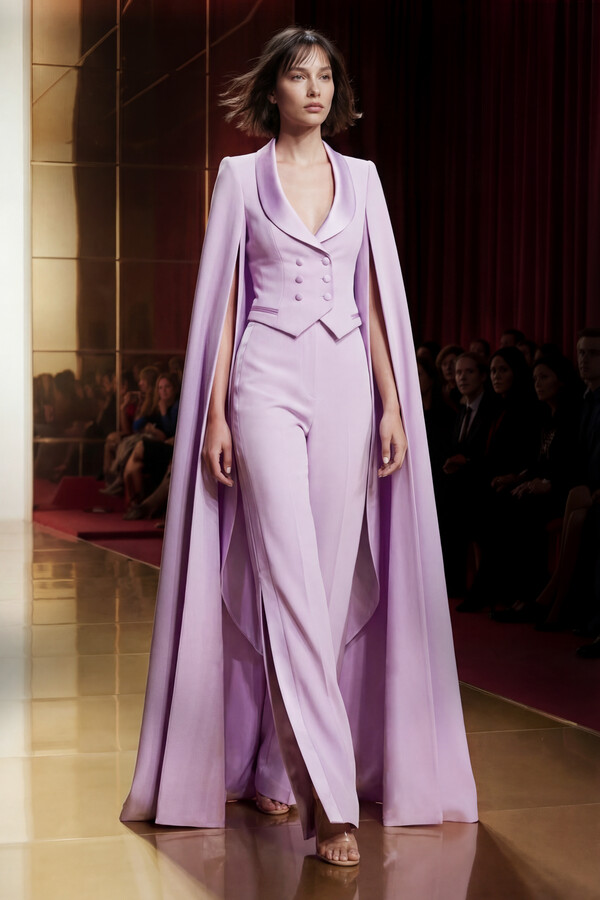
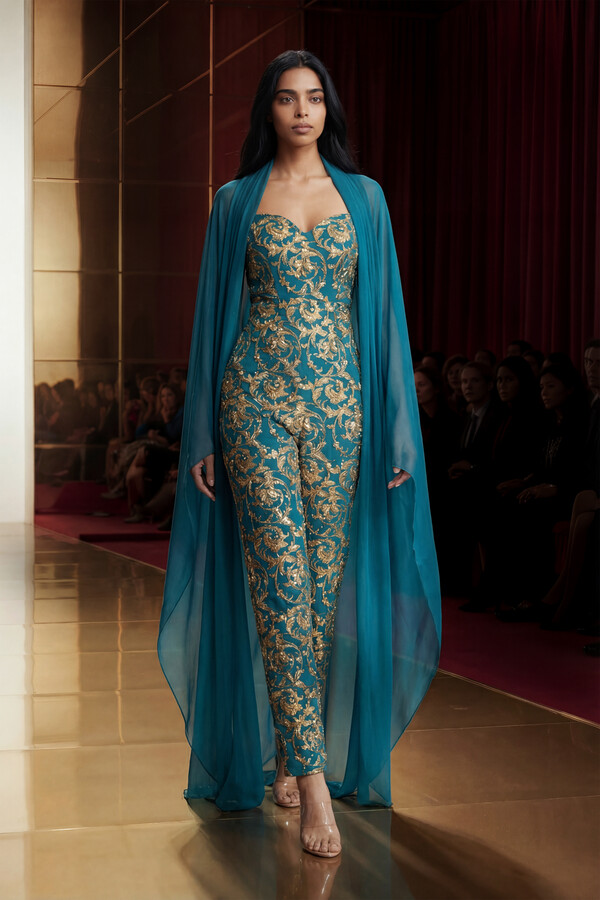
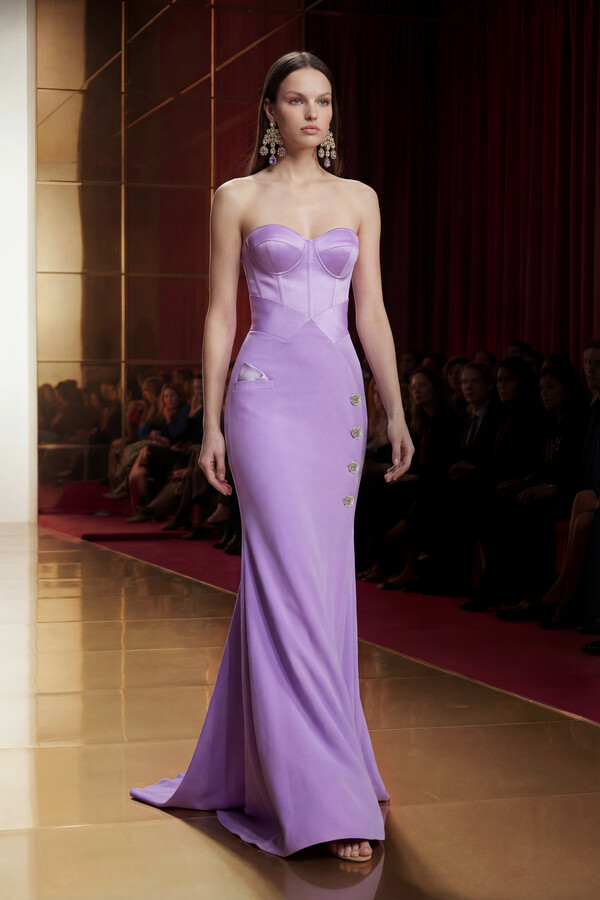
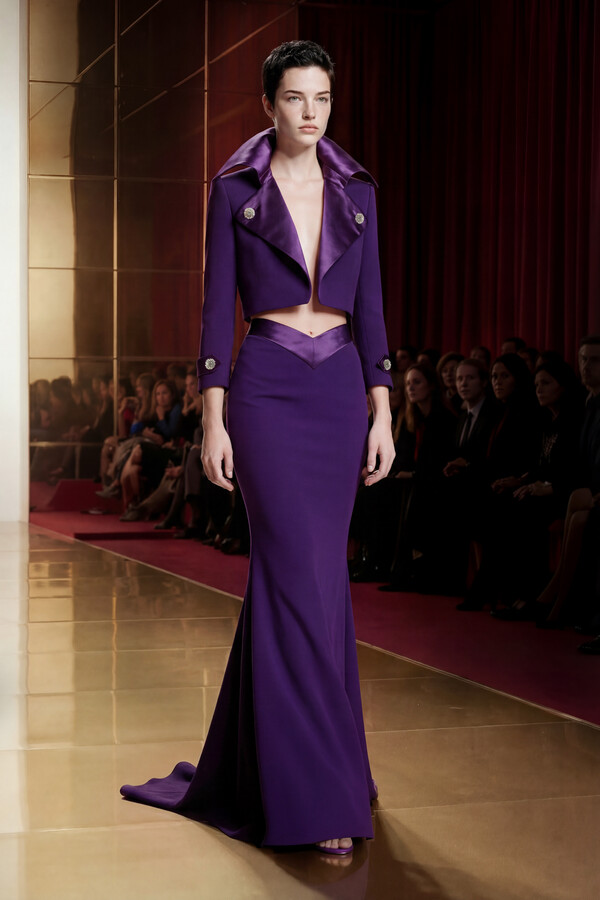
All images by Alexis Mabille