ERMANNO SCERVINO FALL/WINTER 2026-27
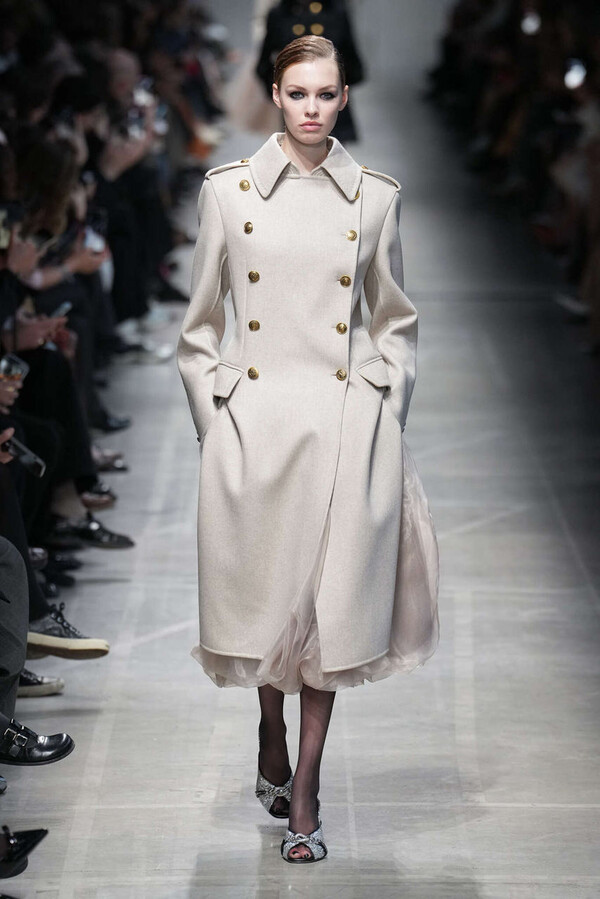
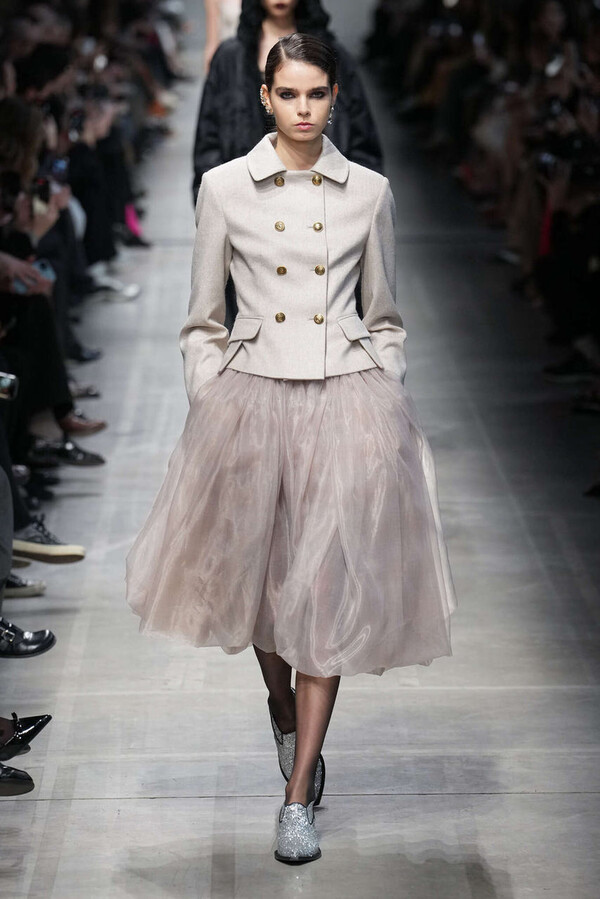
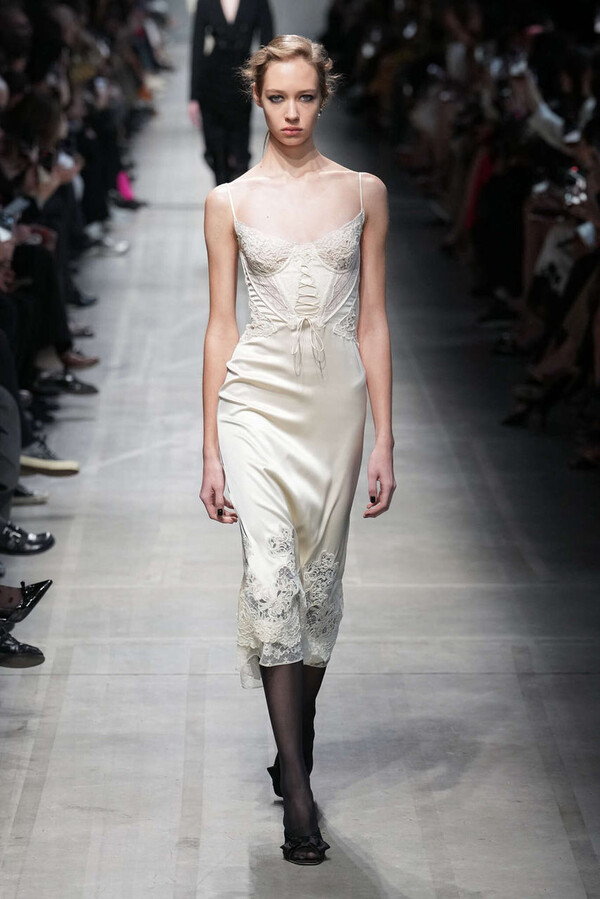
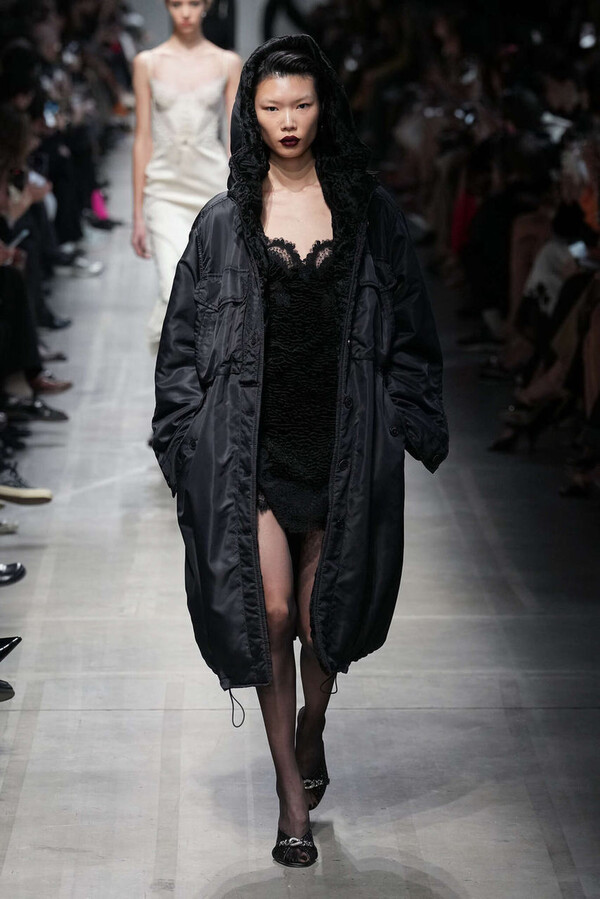
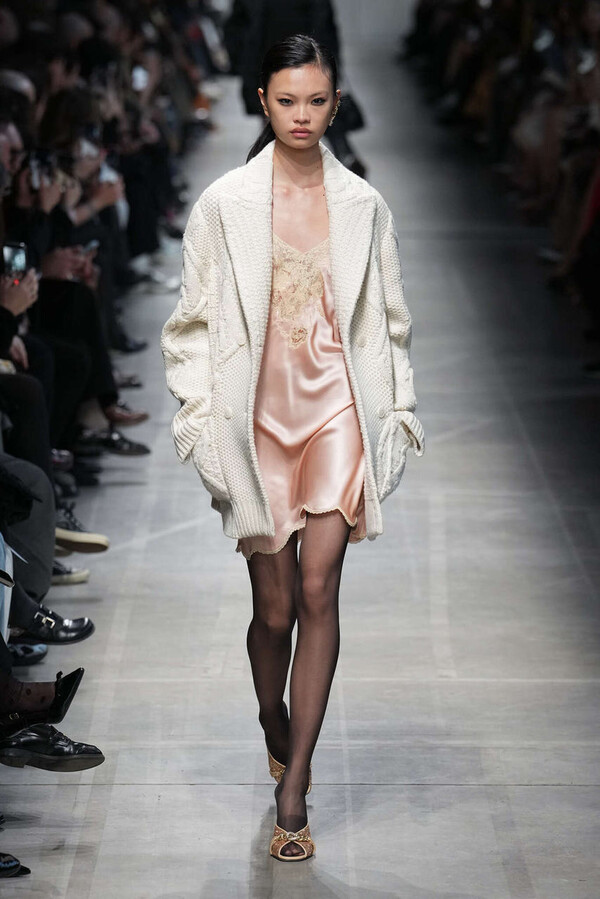
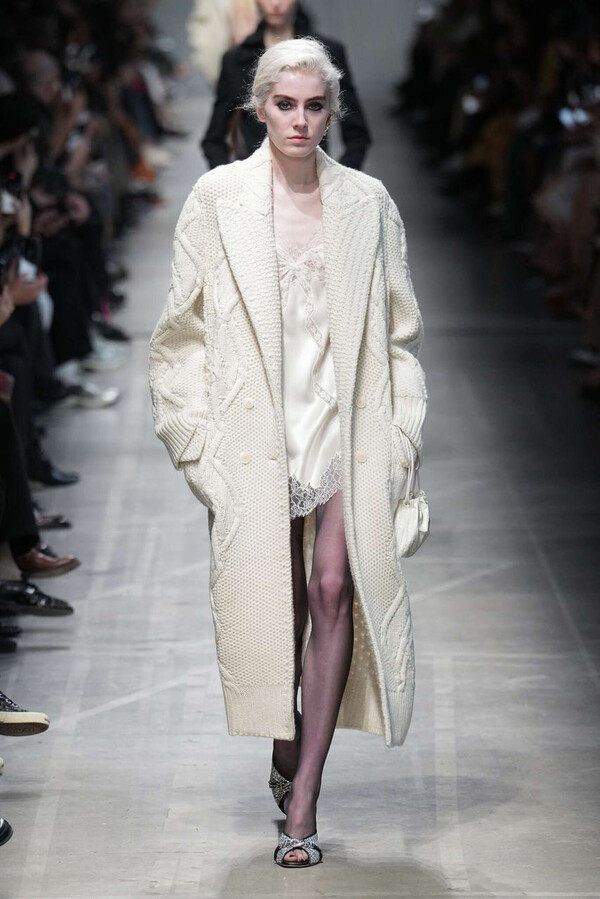
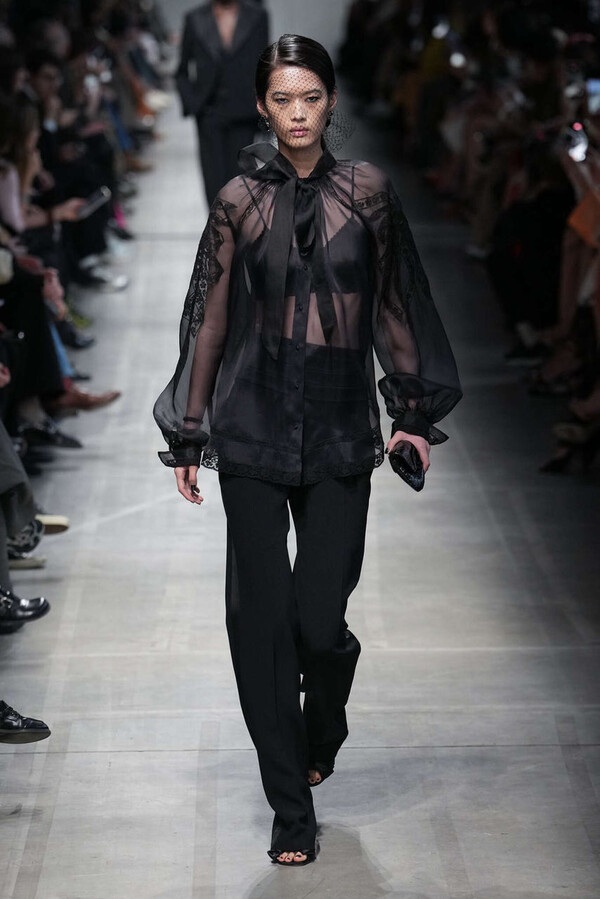
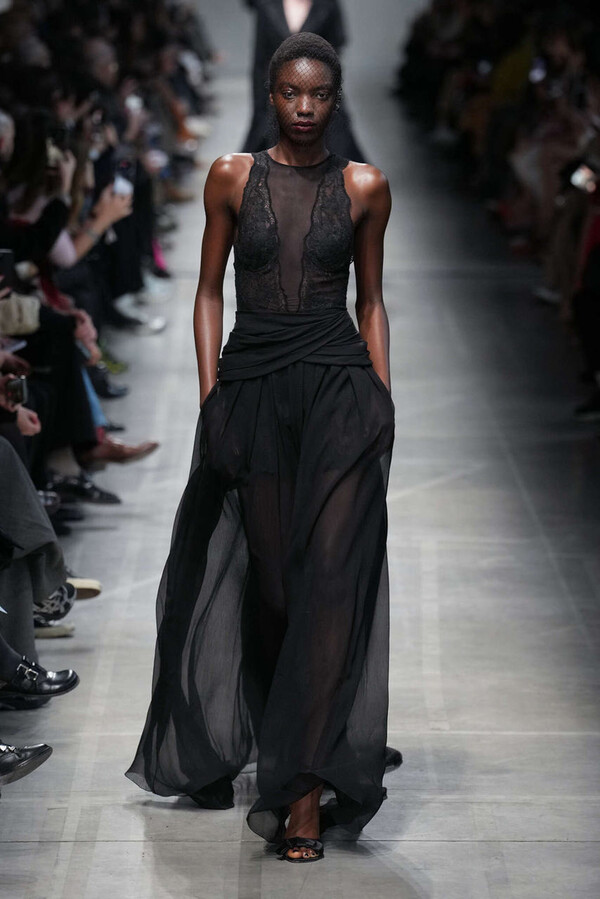
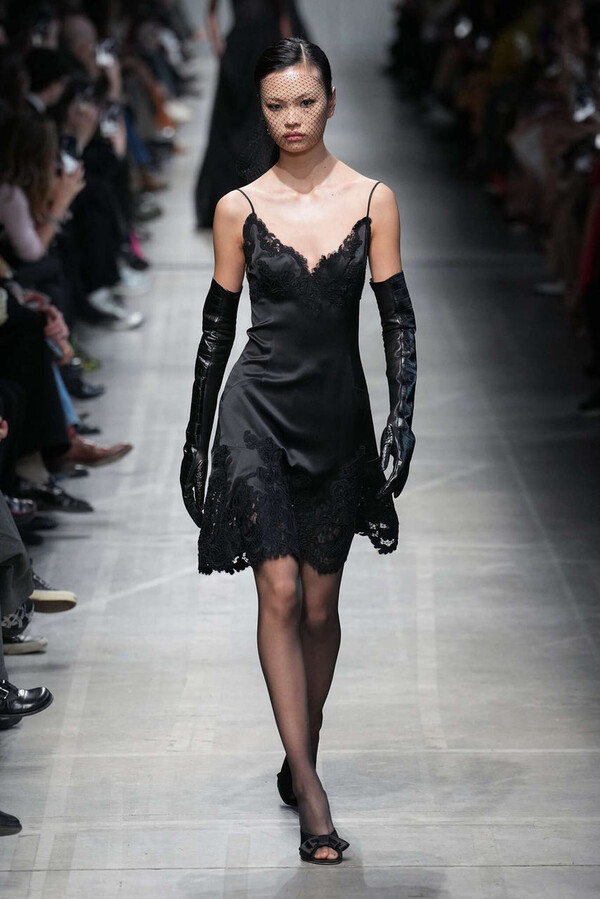
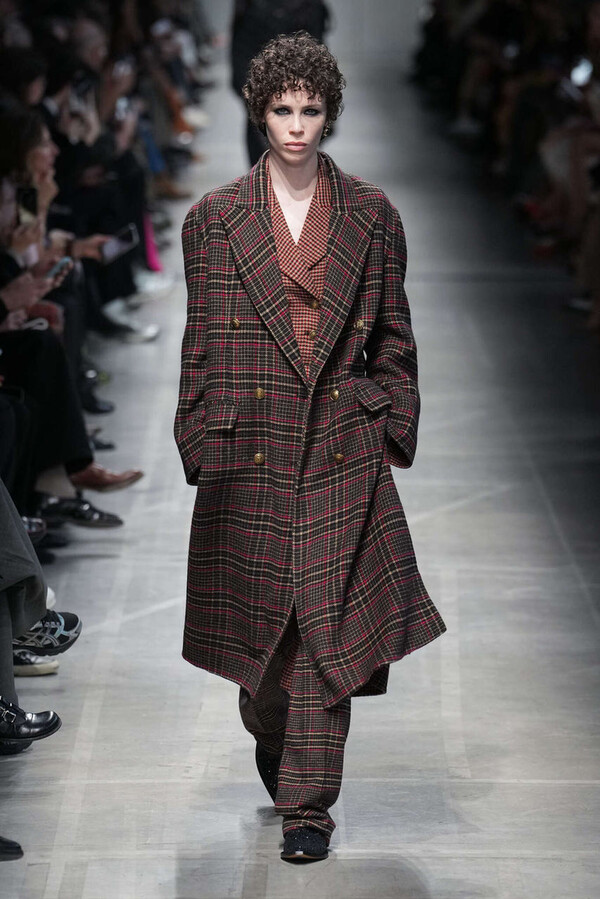
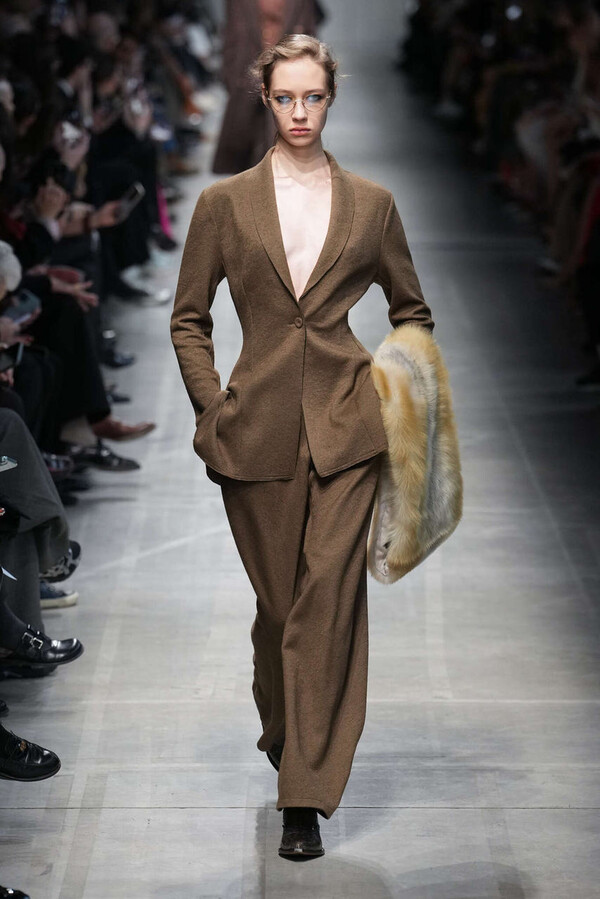
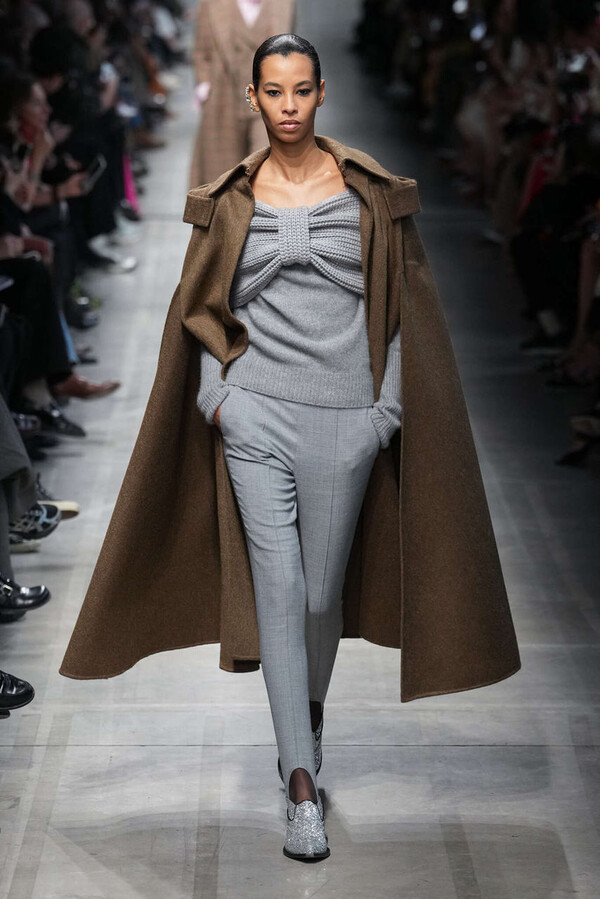
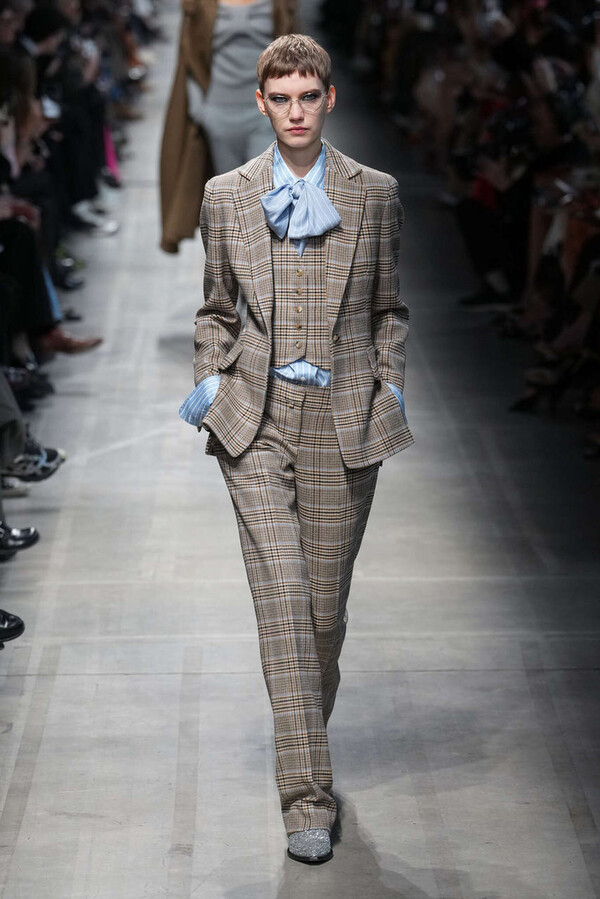
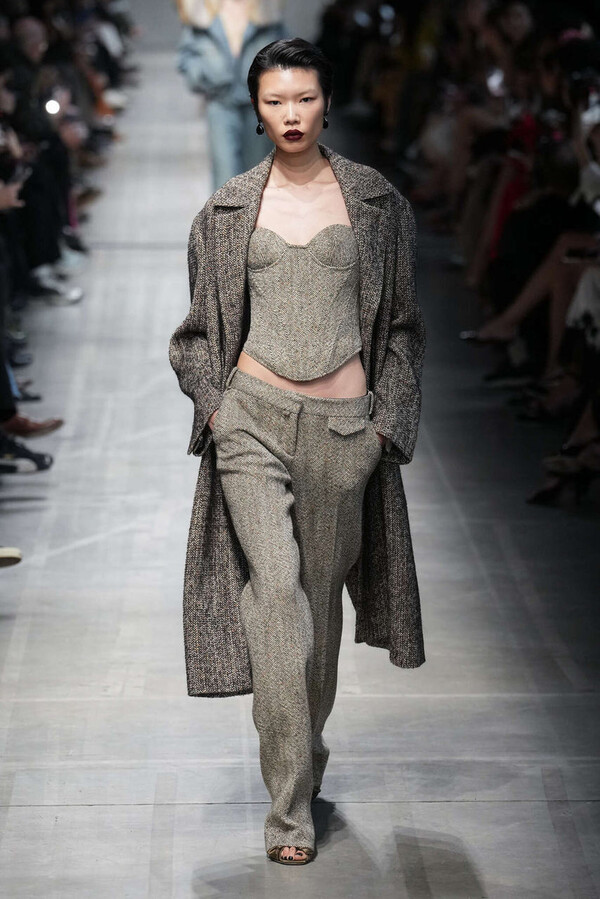
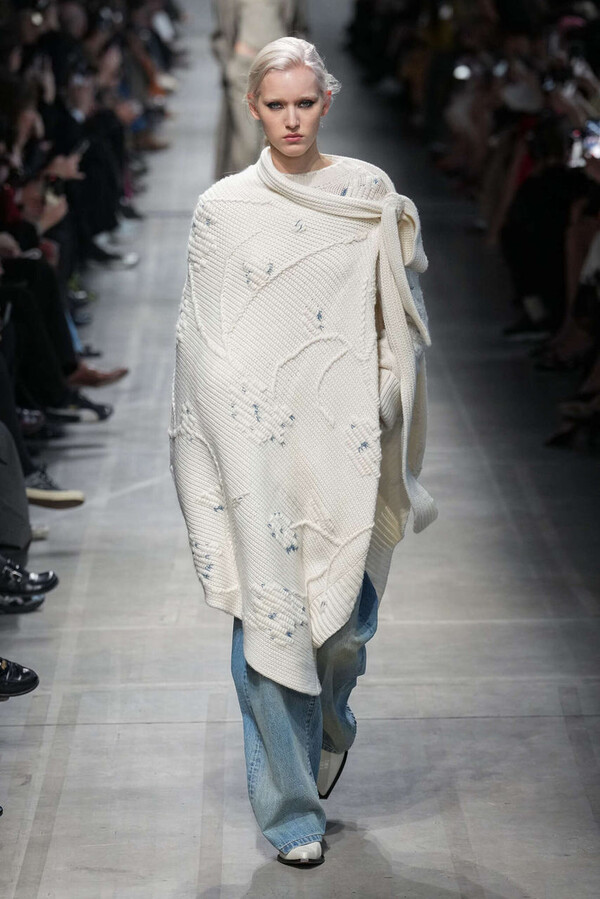
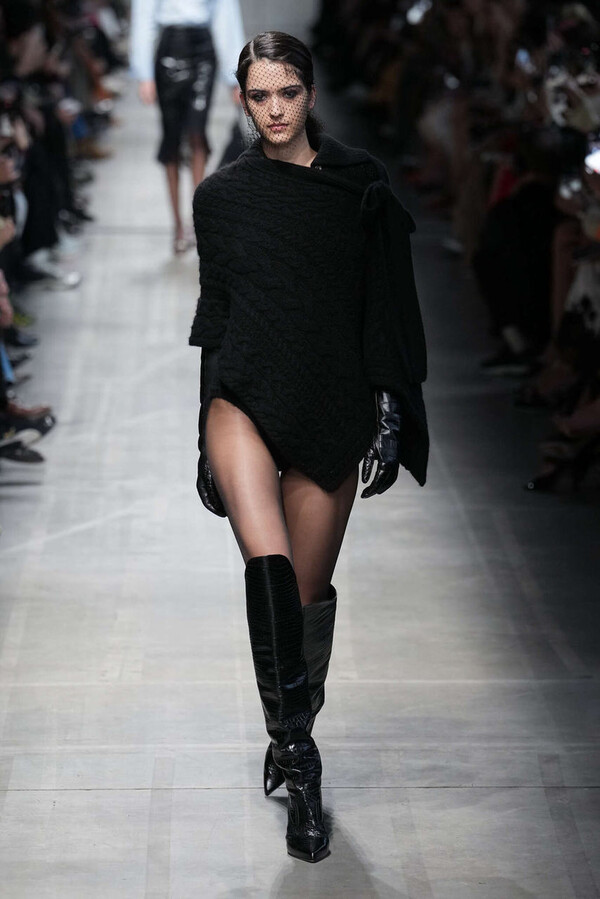
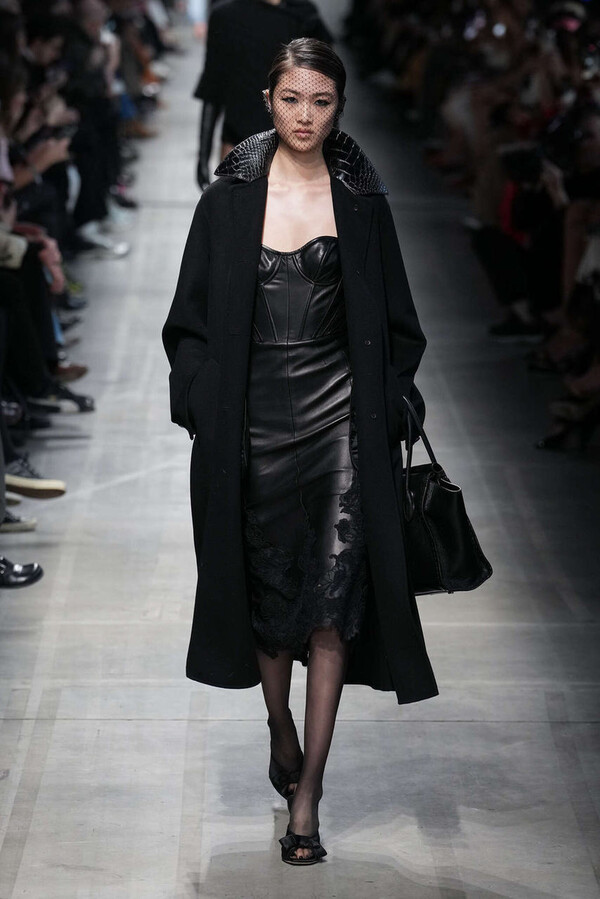
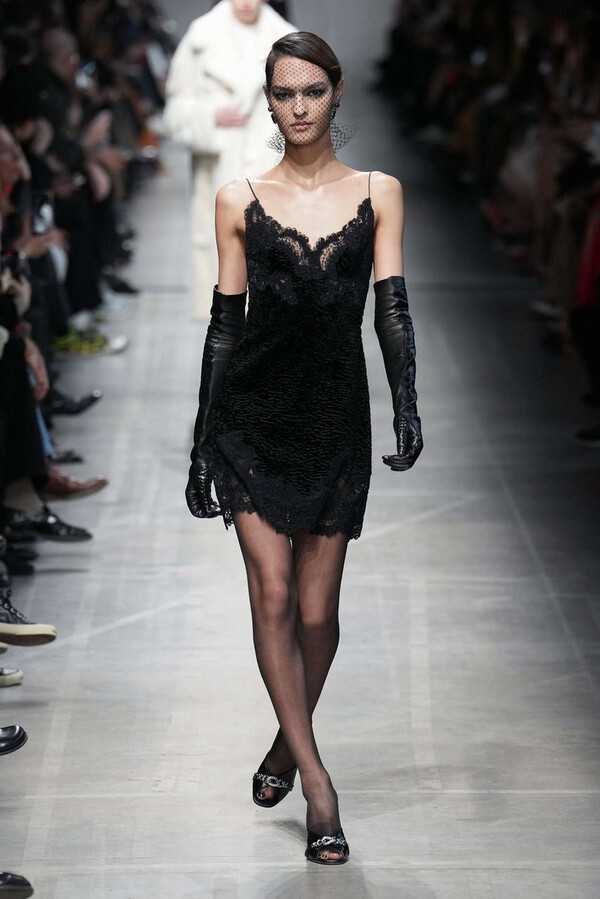
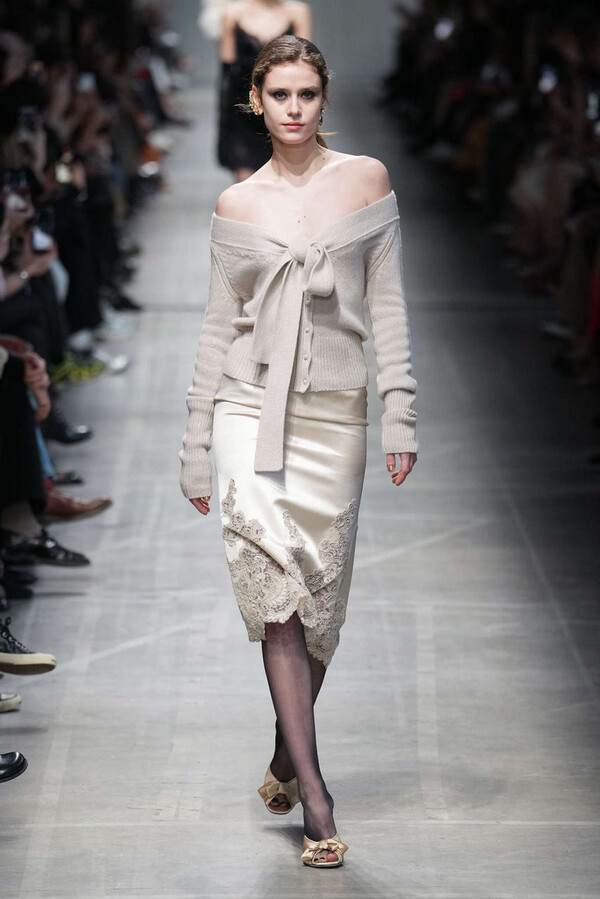
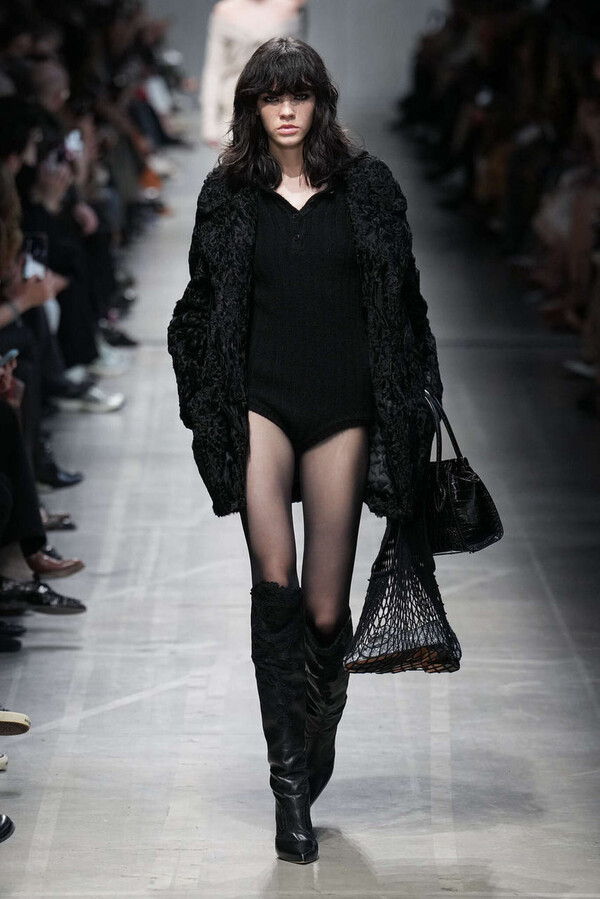
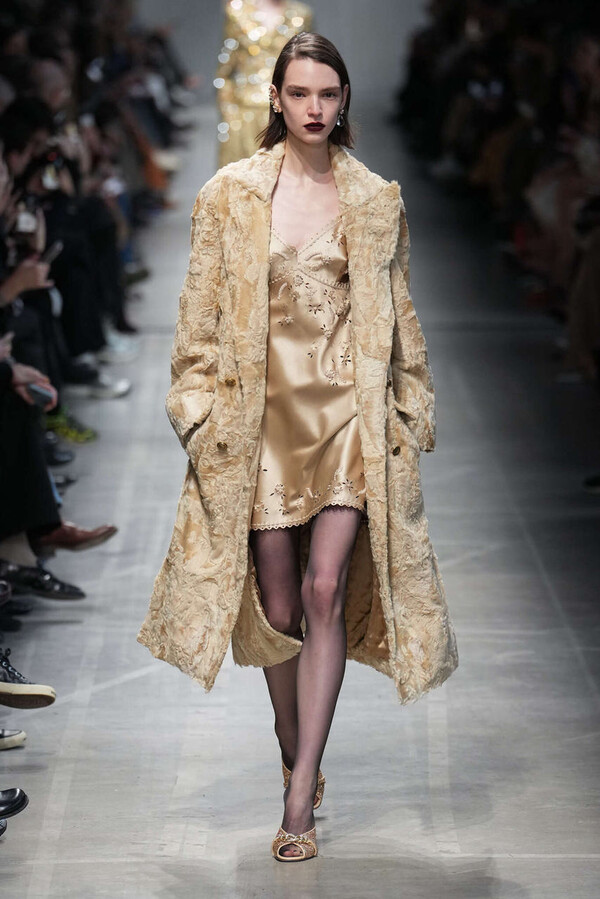
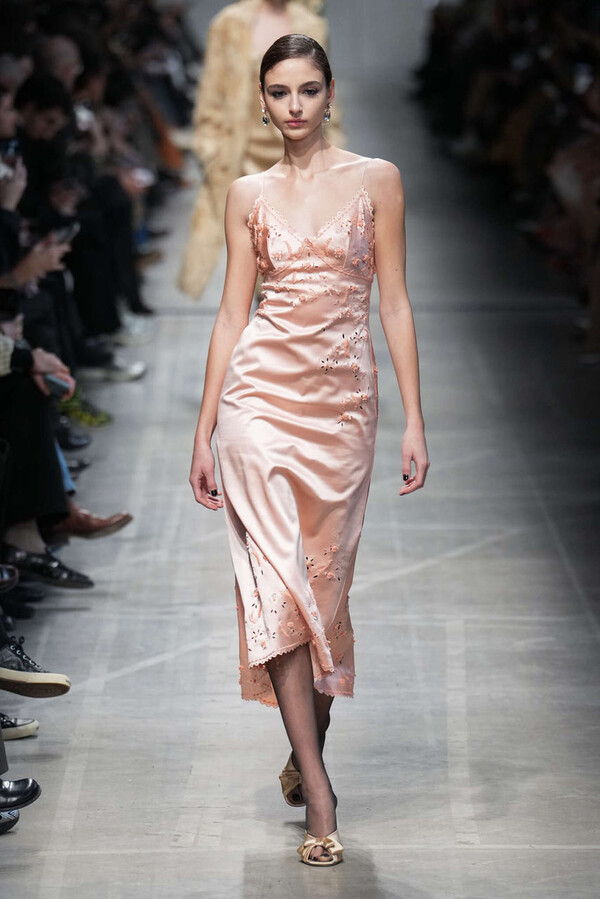
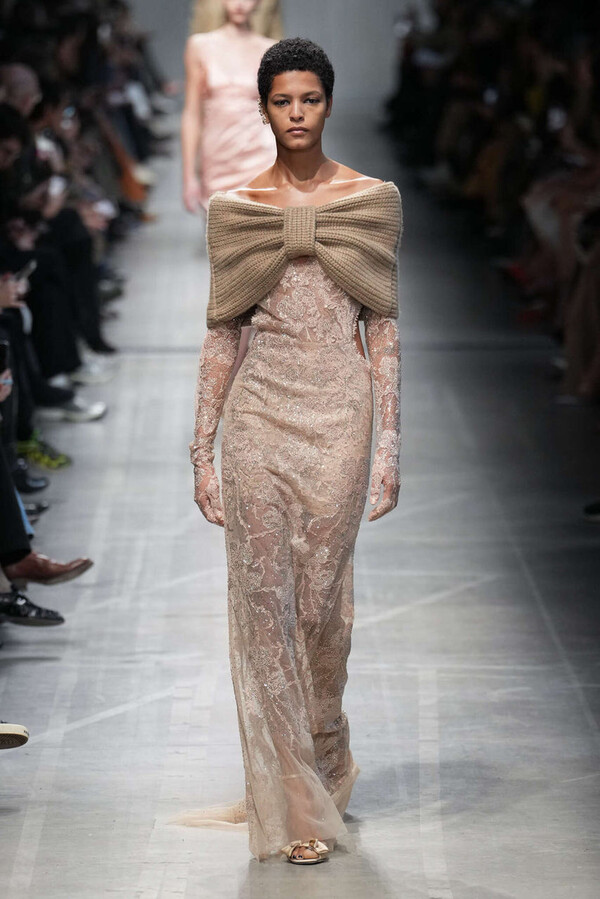
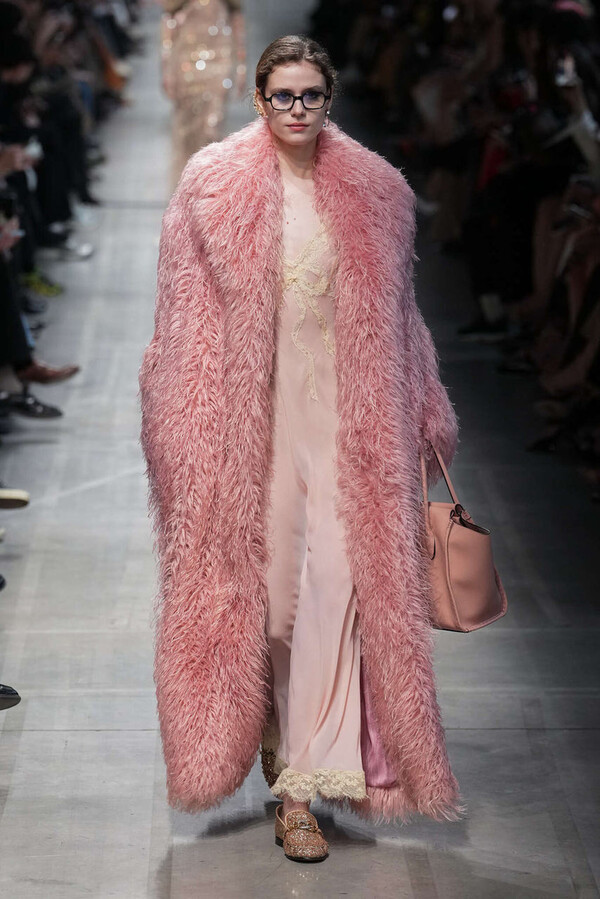
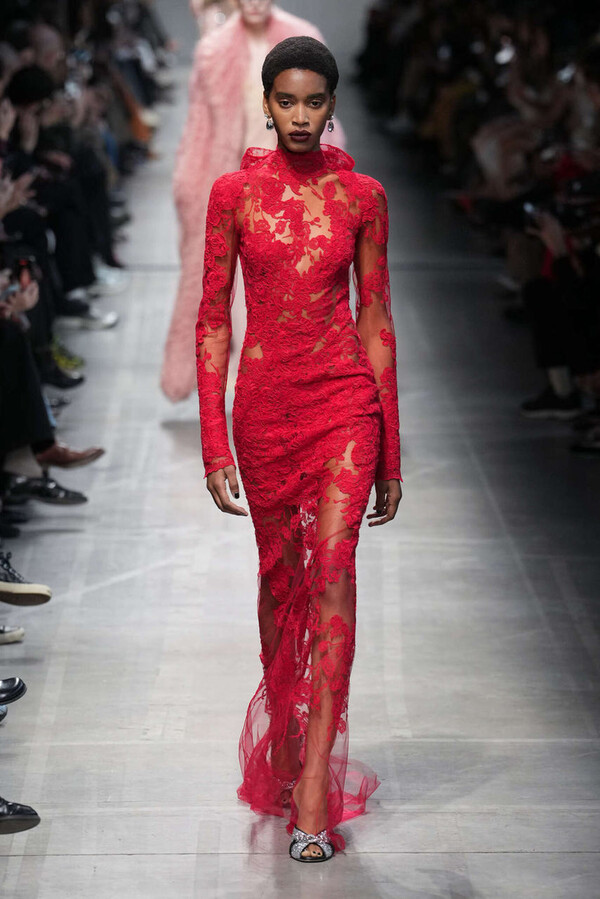
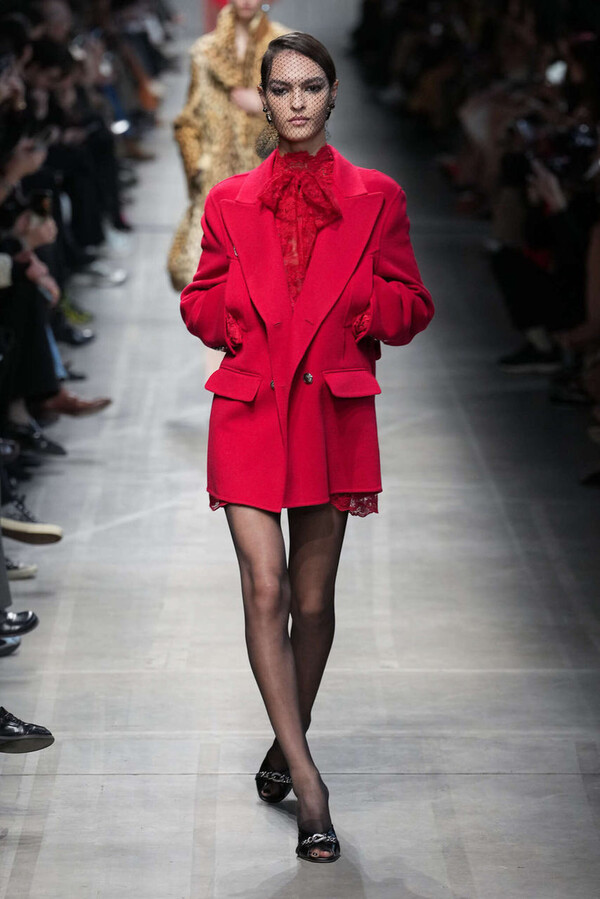
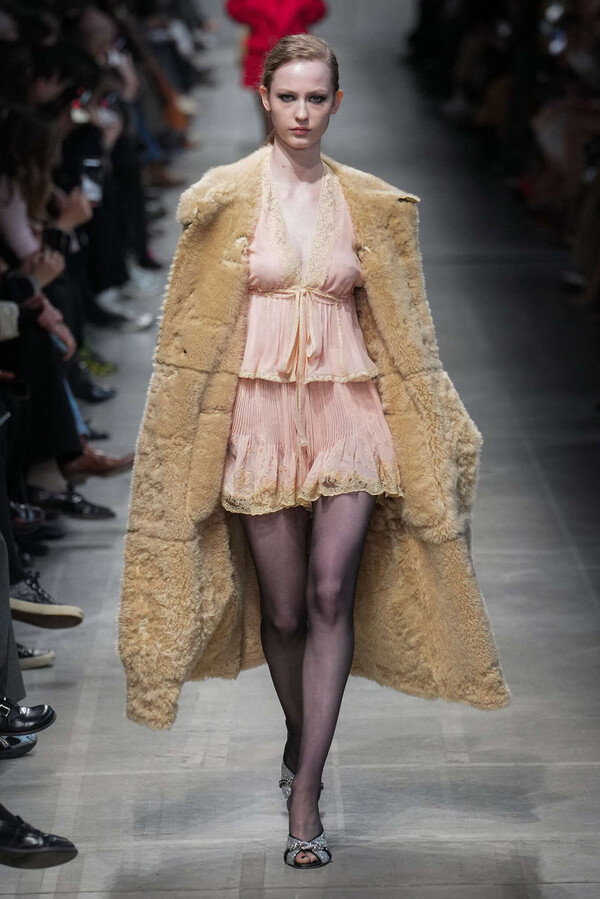
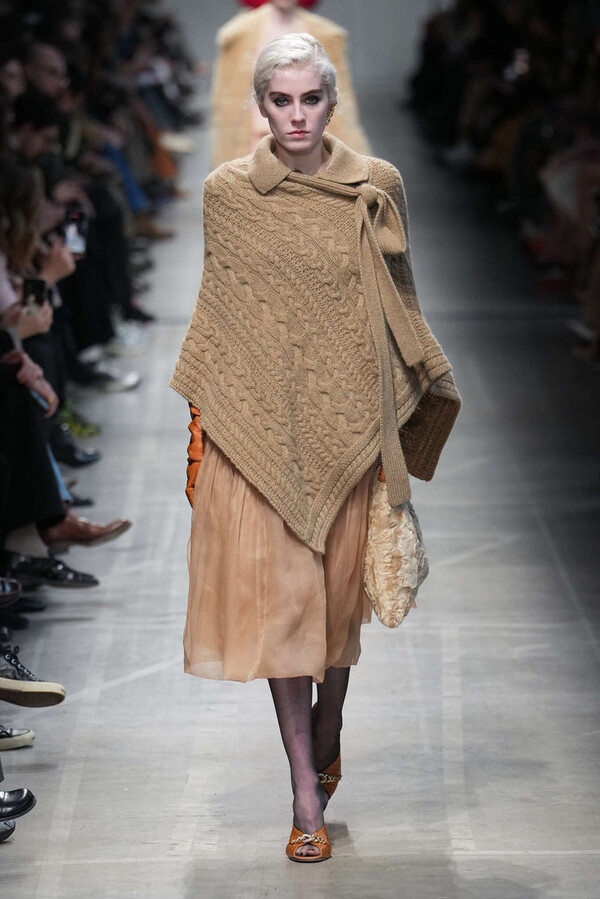
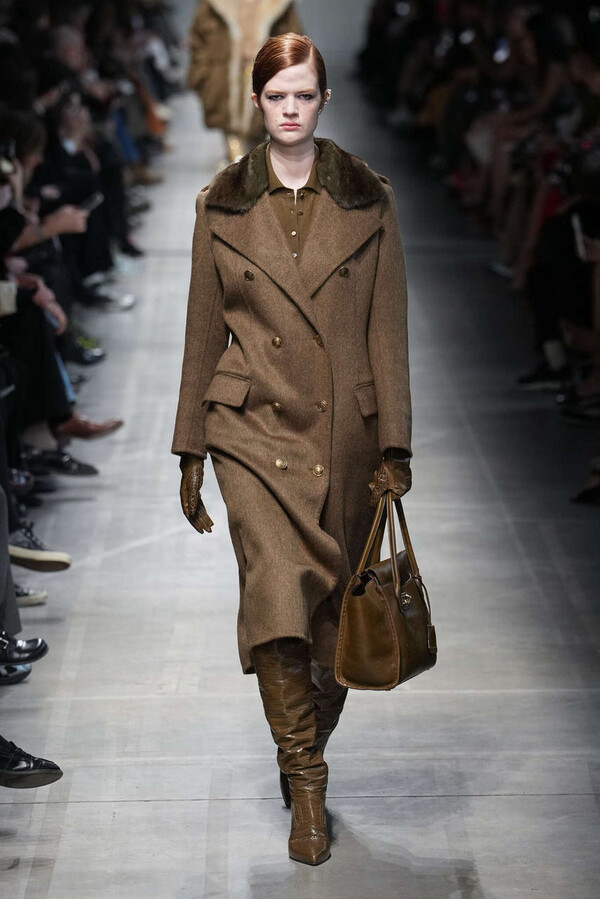
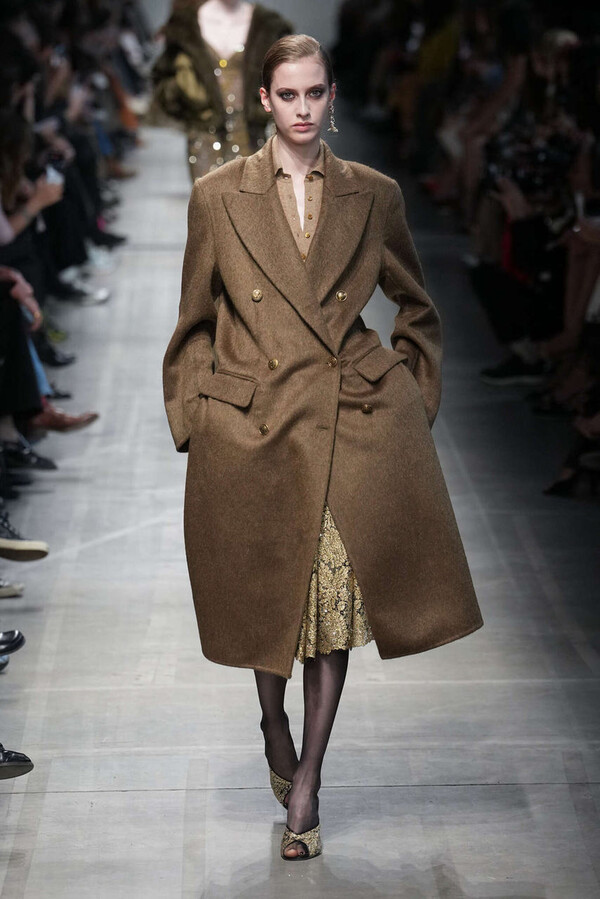
Two styles converge: the solidity of shapes inspired by field clothing — loden green, precise fastenings, structured cuts — and the grace of the slip — pink, tobacco, sheer transparencies. It is the same woman, seen from different perspectives. The one wearing a military coat while concealing another story underneath — more intimate, less decipherable. Men’s boxer shorts appear in transparent organza. A car coat seems sculpted in knitwear, yet is supported on the inside by a veil of lace. A weightless pashmina nonetheless shapes a jacket constructed like a shirt.
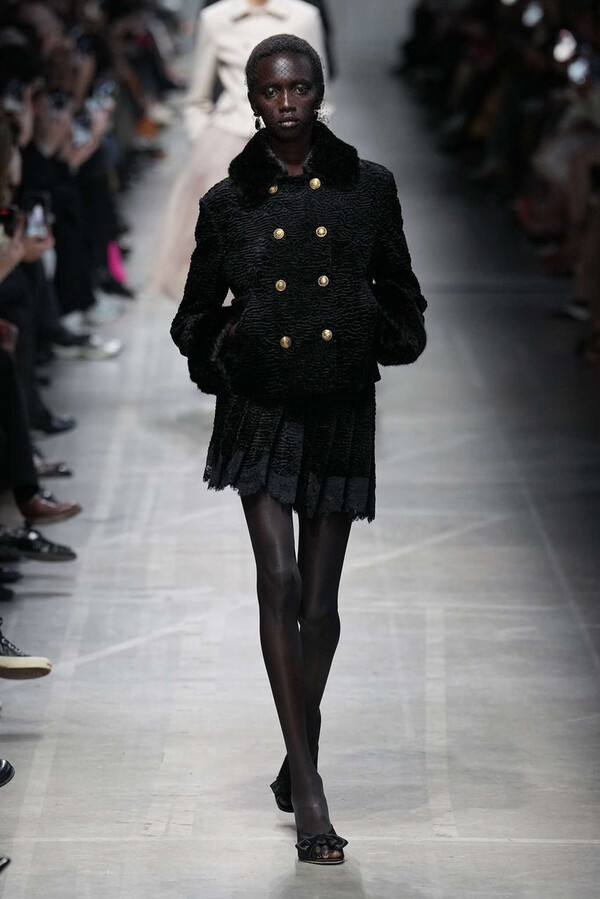
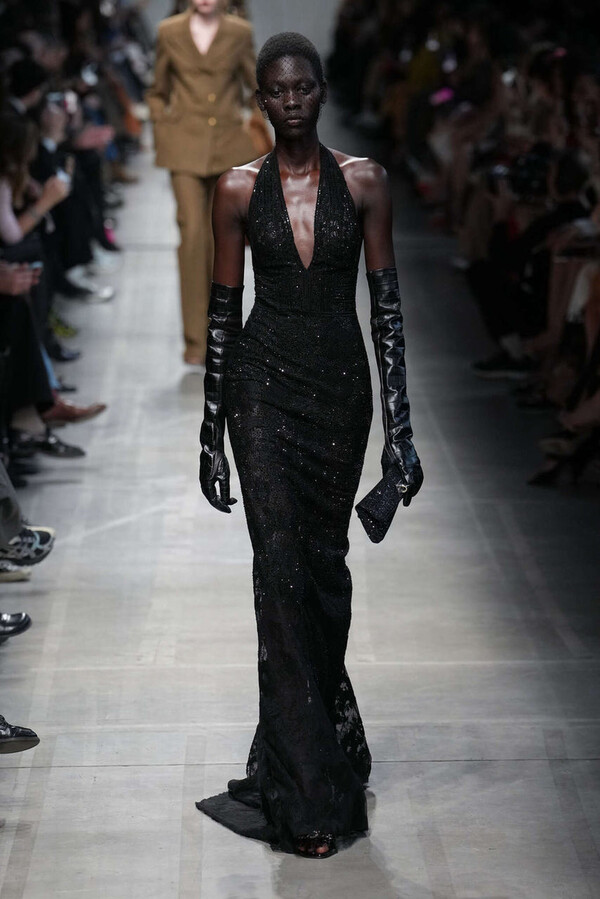
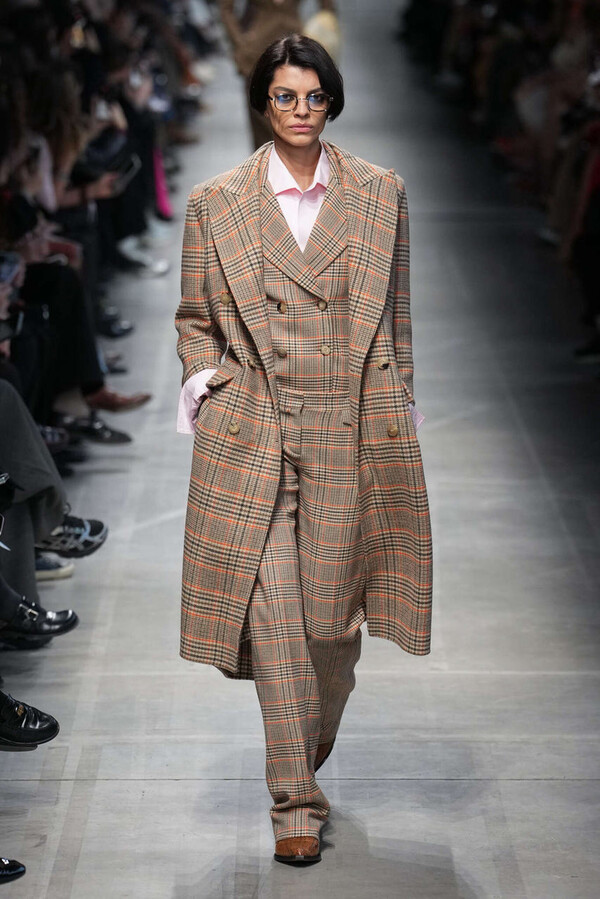
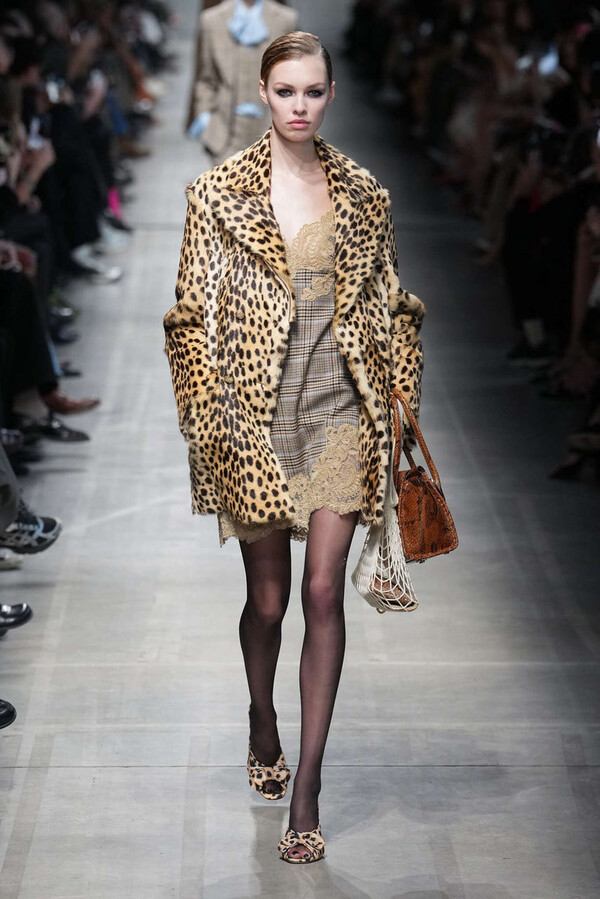
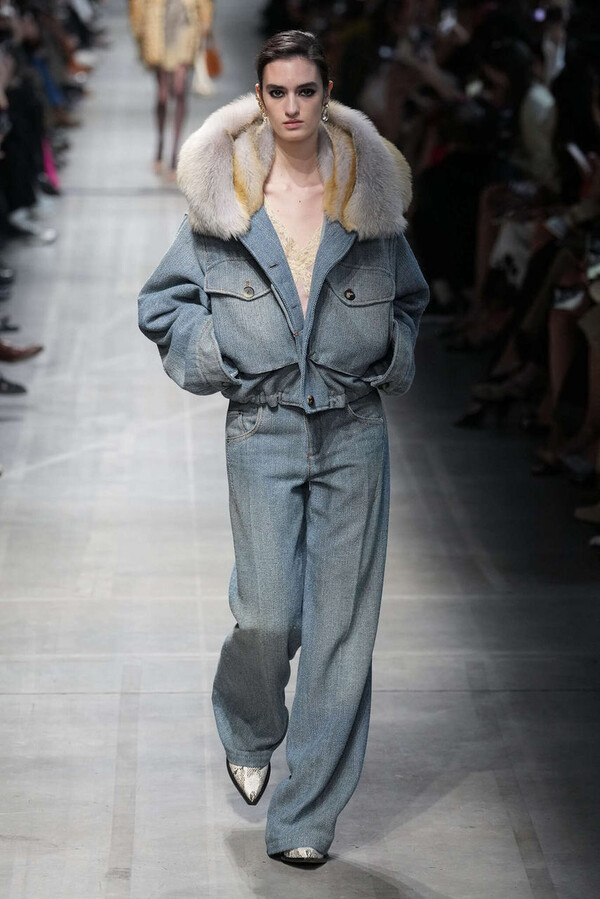
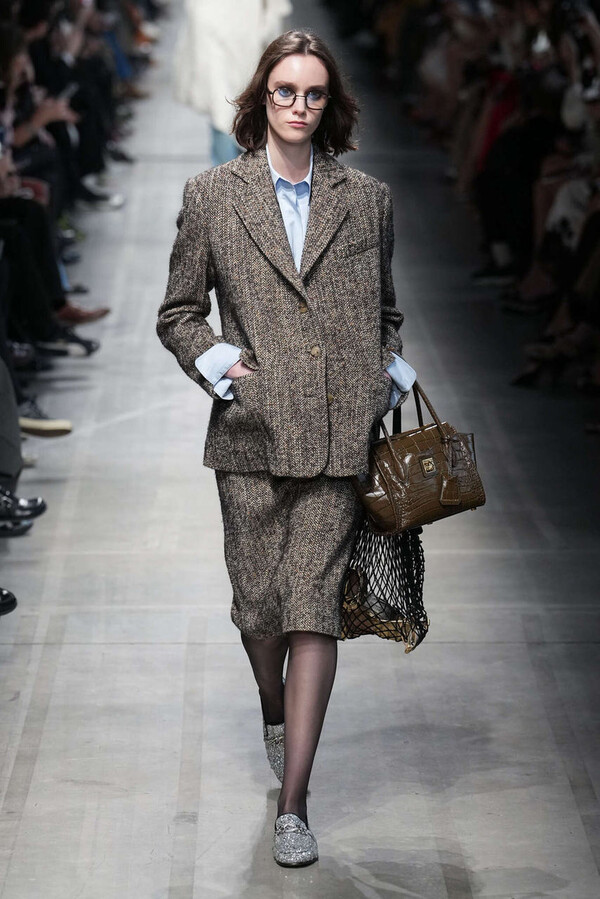
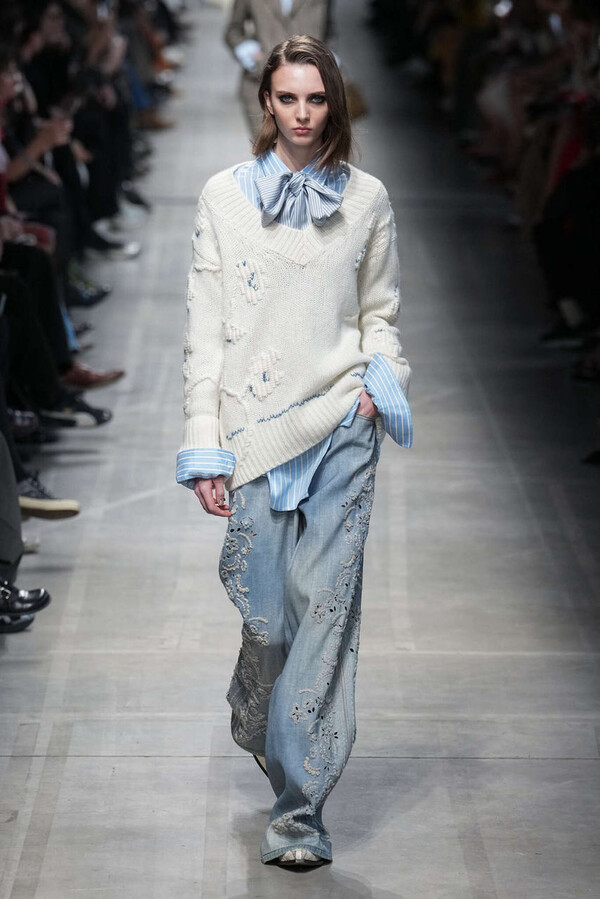
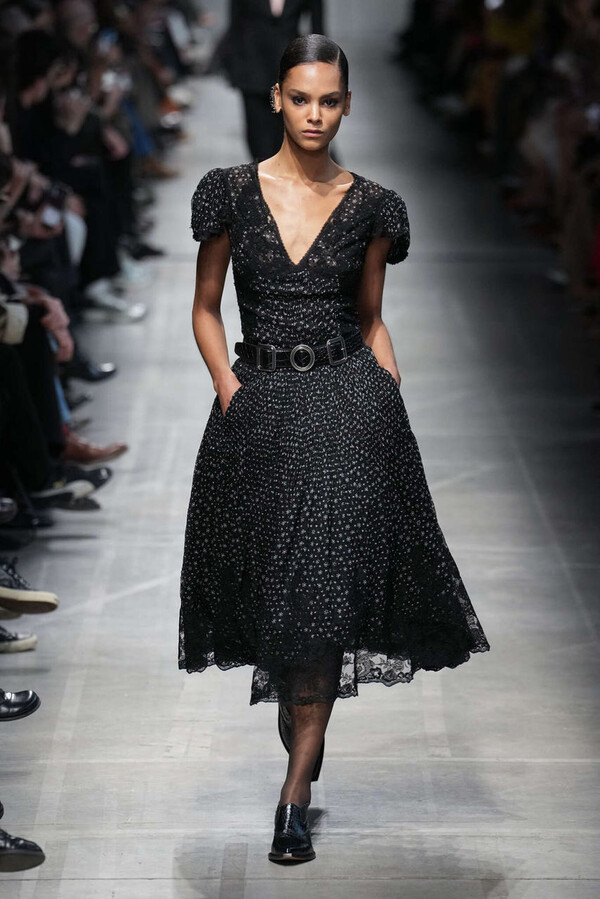
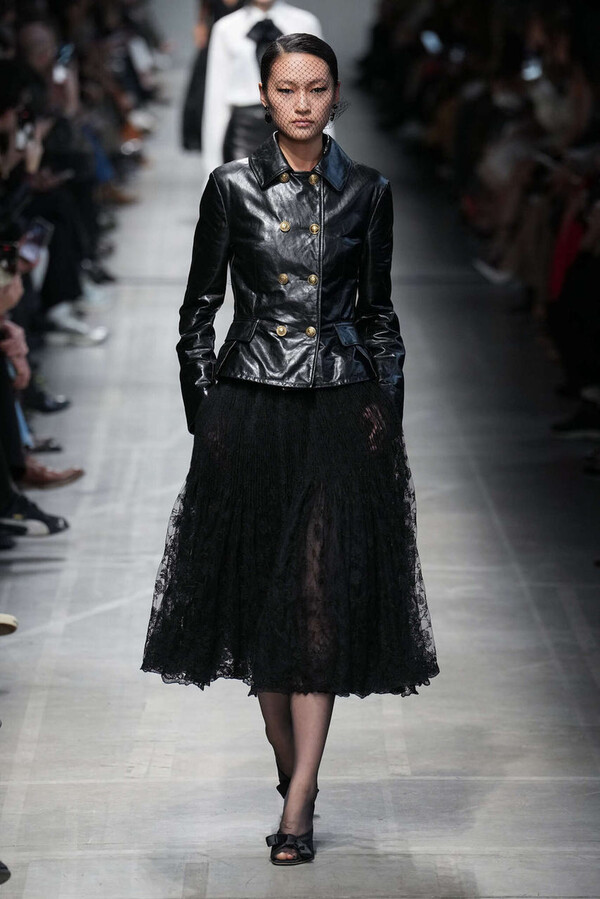
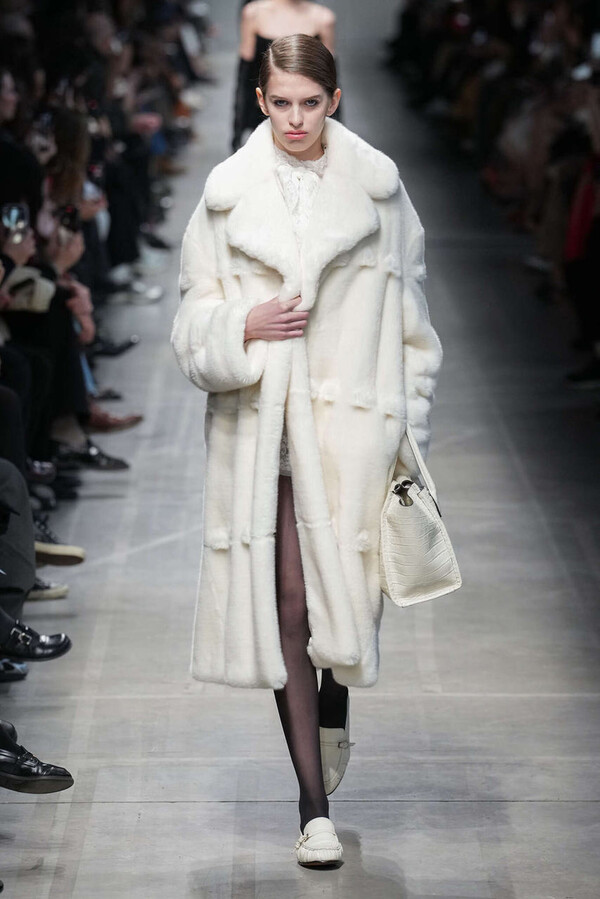
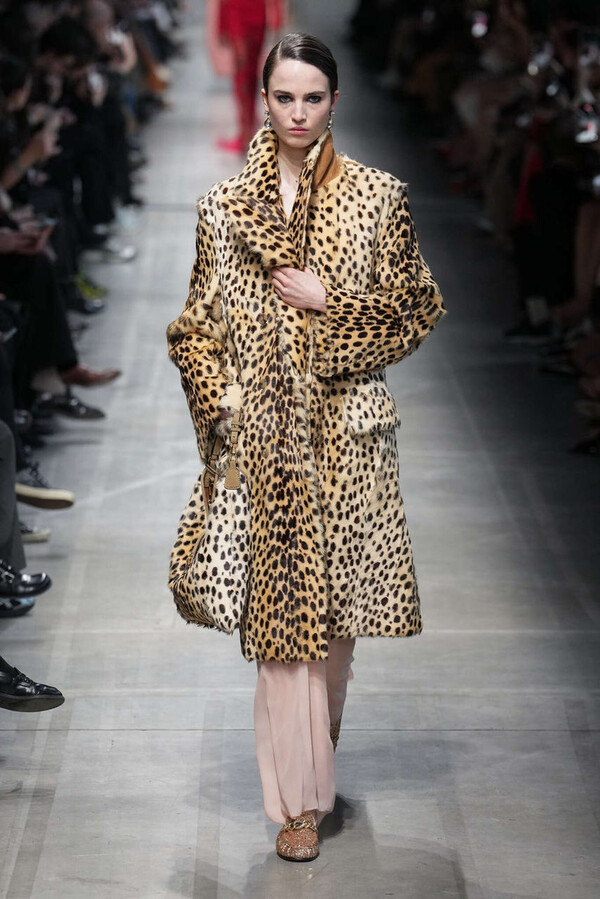
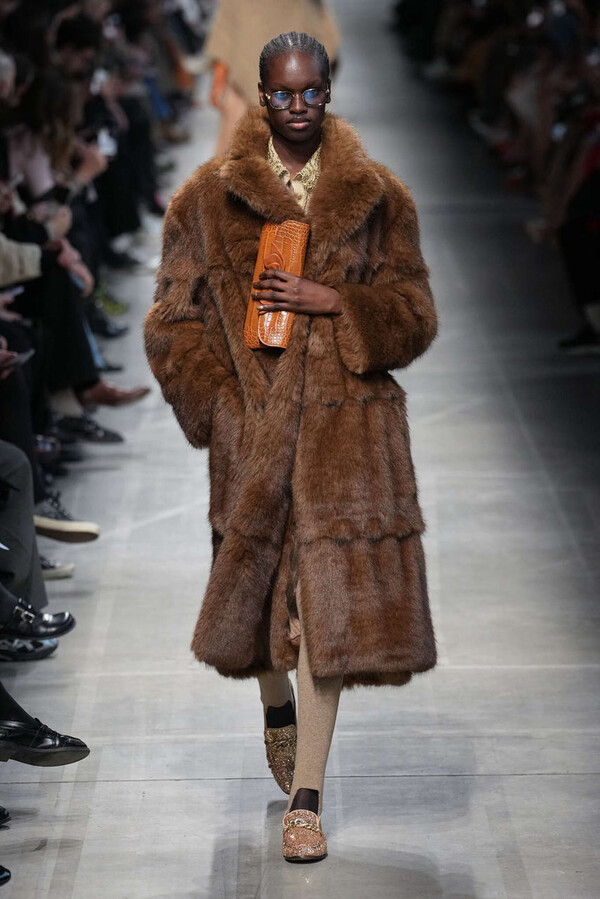
Even denim carries a different memory: its weave echoes the structure of Donegal tweed, with irregular points of light and the visual density of wool. Treated as a noble fabric, it is cut with the same precision as an overcoat and opened to silk and lace interiors. Then a third presence emerges, quieter in tone — an elegance belonging to the homes of the past, to perfumed drawers and unhurried gestures. Textile mink trims the cuffs of an astrakhan peacoat. Leopard print slips beneath a petticoat. Coral-pink chiffon is edged with straw-coloured lace. An evening dress carries the engraved memory of a bouquet across its surface.
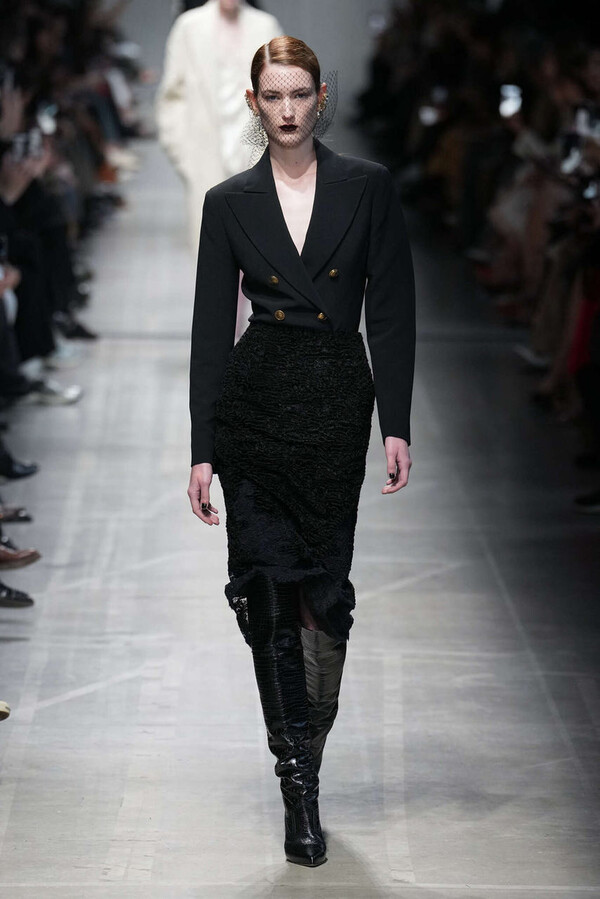
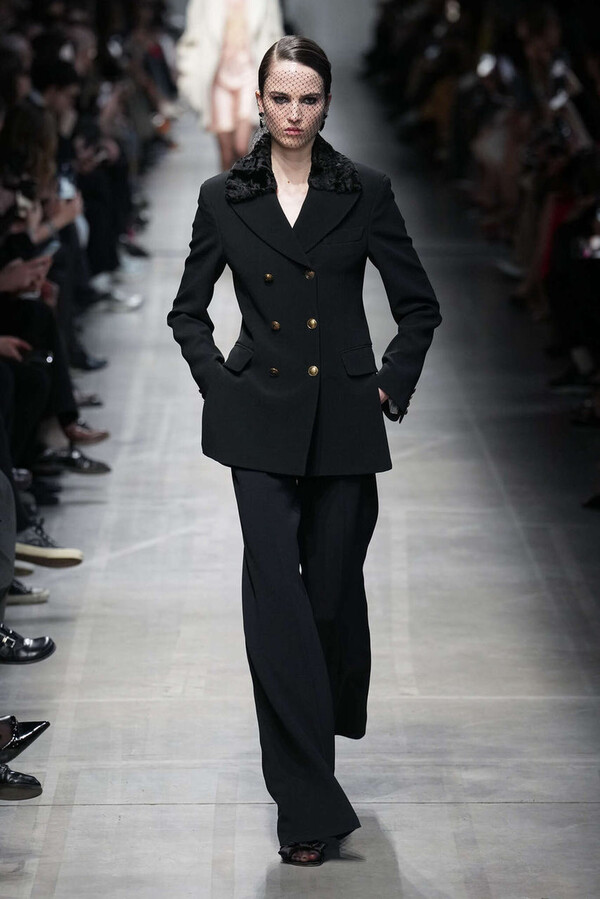
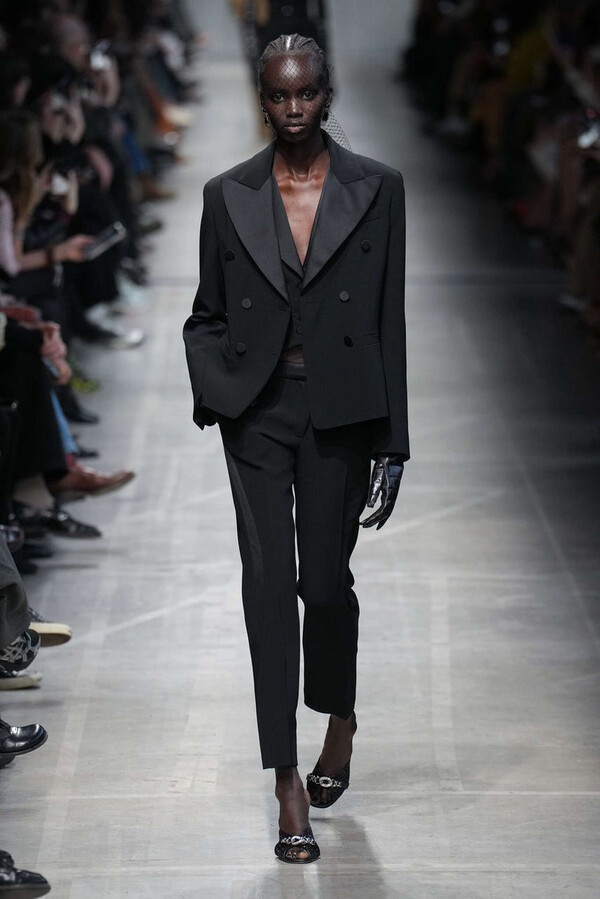
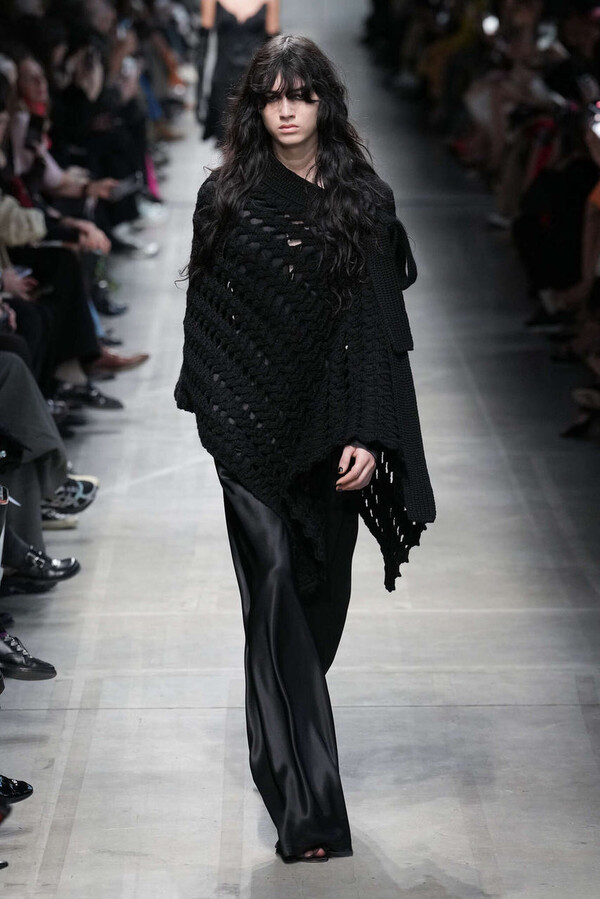
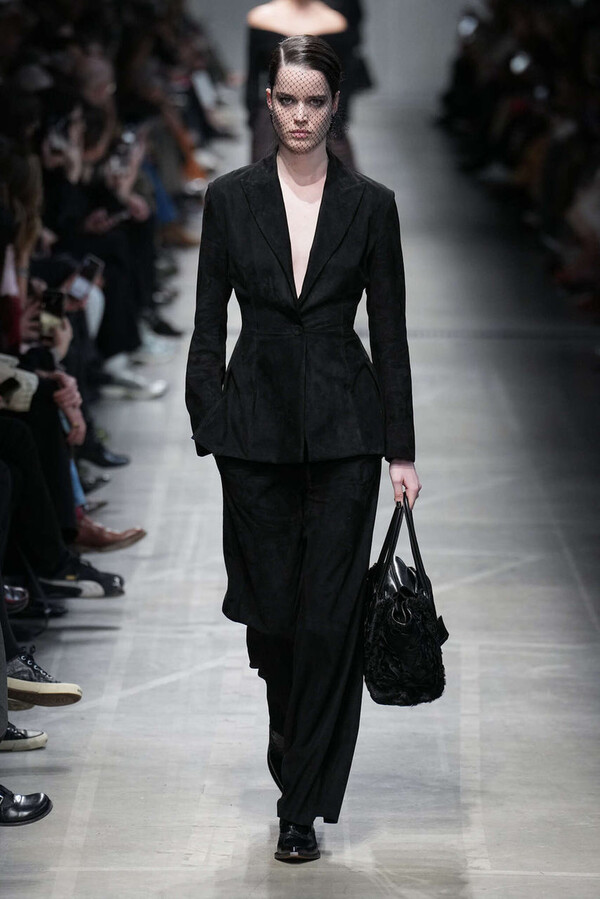
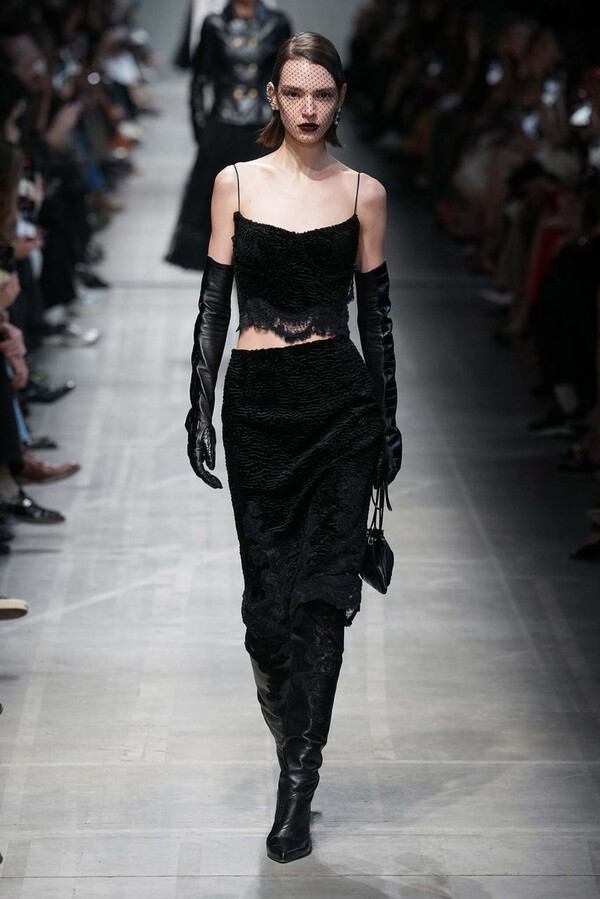
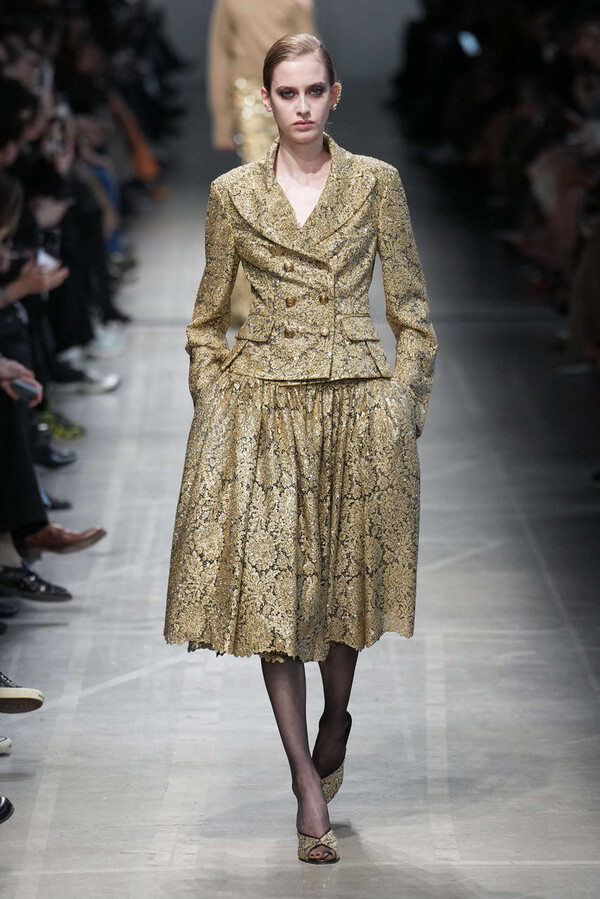
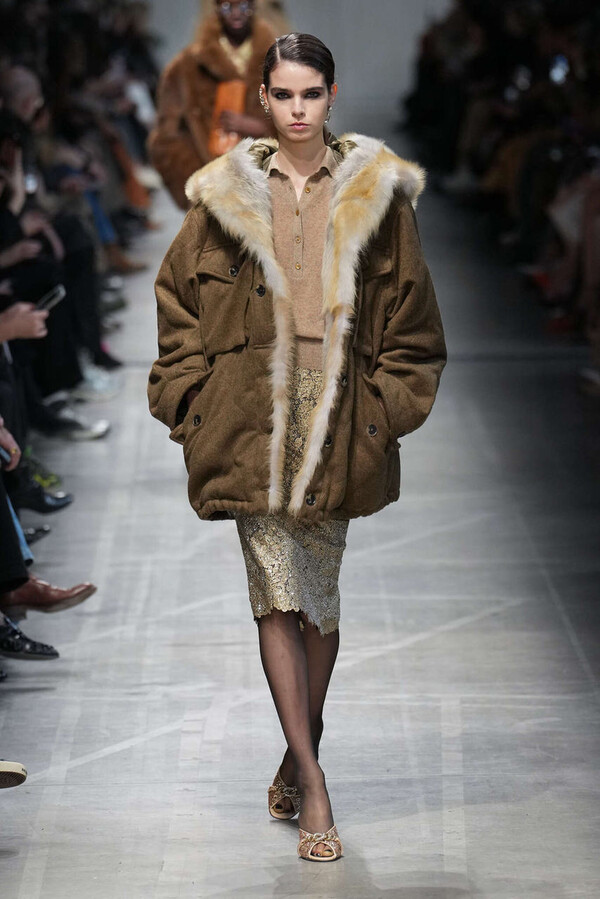
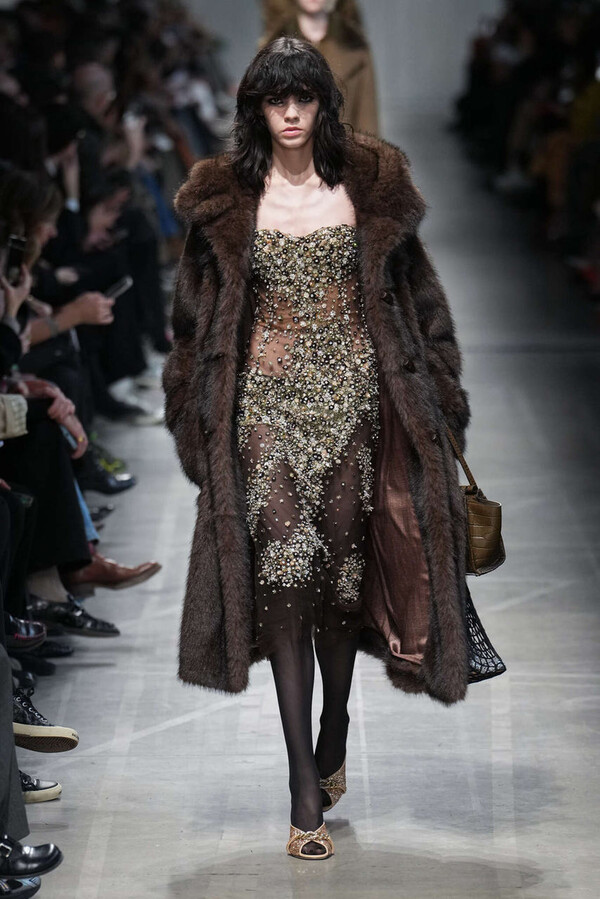
This season, Ermanno Scervino works once again as an alchemist of fabrics: furs are assembled with raised inlays; double-breasted coats become featherweight outerwear — structured yet extraordinarily light; what appears solid reveals itself to be airy. Volumes oscillate between decisive restraint and elusive lightness, like moods that resist definition. Two worlds inhabit the same fabric — the same surface that resists yet allows itself to be crossed, the same silhouette that simultaneously occupies and dissolves in space.
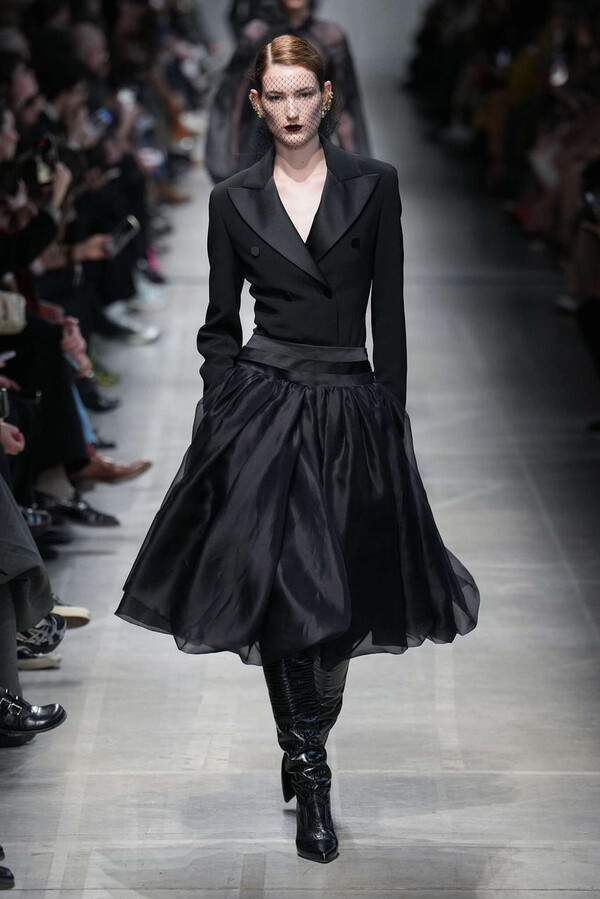
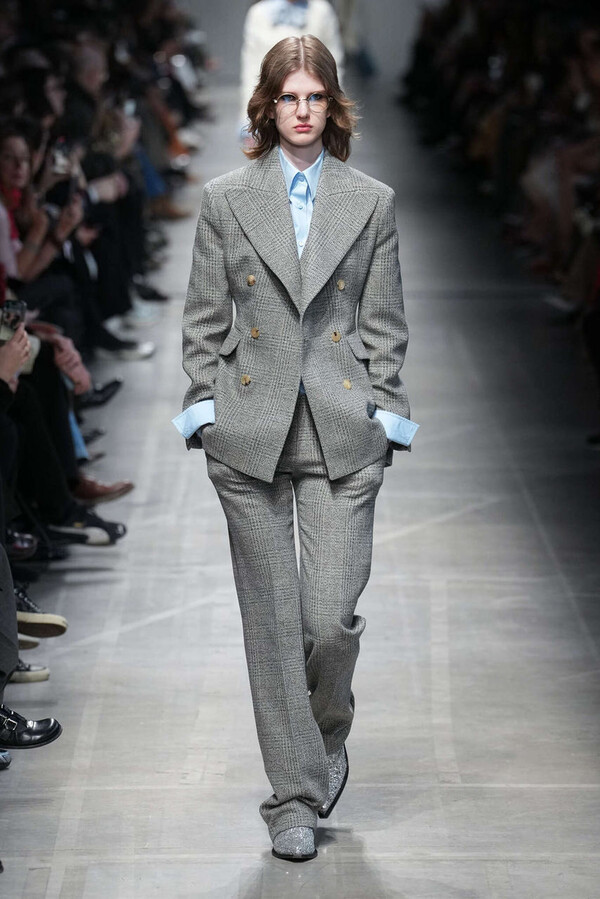
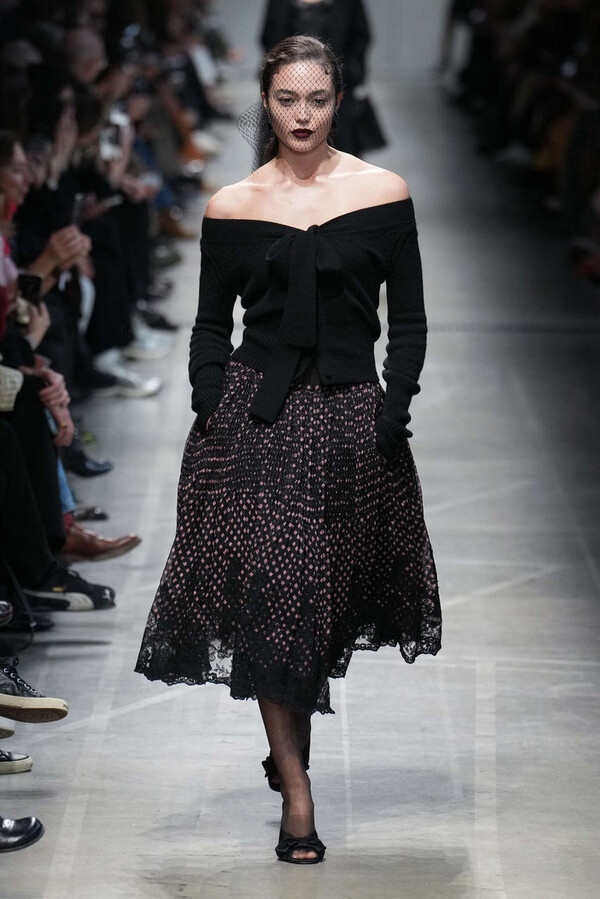
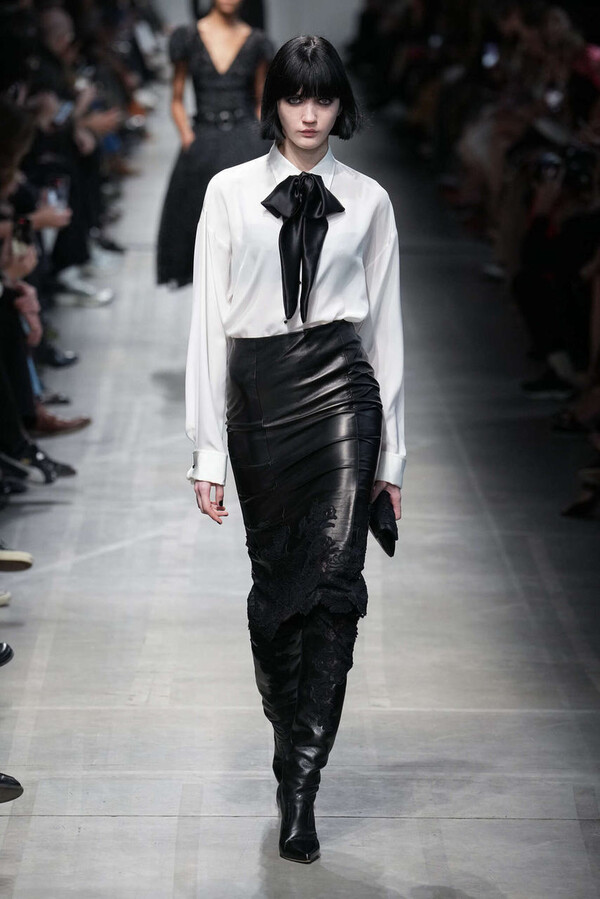
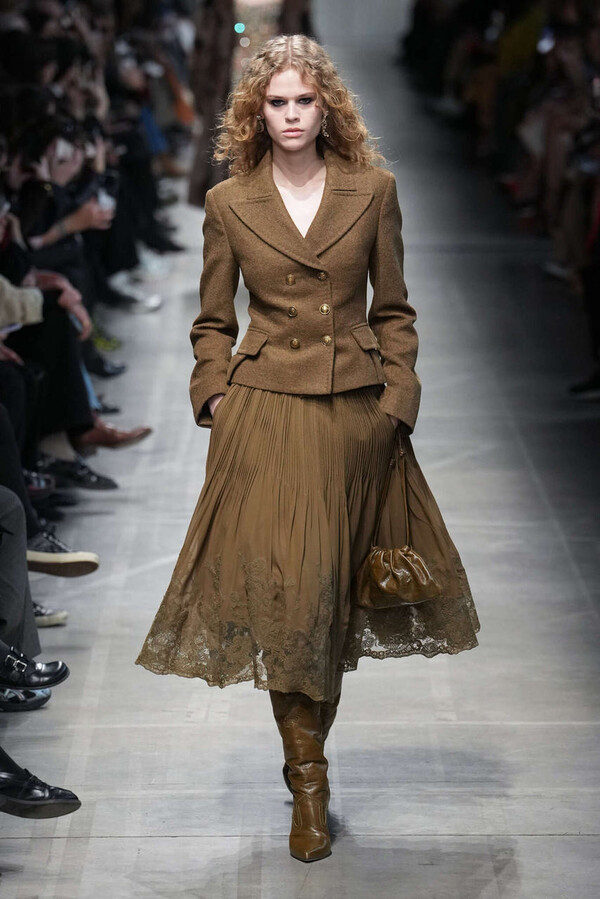
Scervino does not celebrate the uniform; he inhabits it from within, transforming and subverting it with the same care reserved for a haute couture gown. Riding coats and capes construct precise, controlled volumes until organza or gold macramé dotted with crystals escapes from slits and hems, and skirts — structured by hundreds of ribs — open with sudden amplitude. Rigour is never abandoned; it is simply interrupted by something that cannot be contained. As in Sacumdì Sacumdà, sung by Mina, which opens the show and evokes the unpredictable movement of skirts in motion.
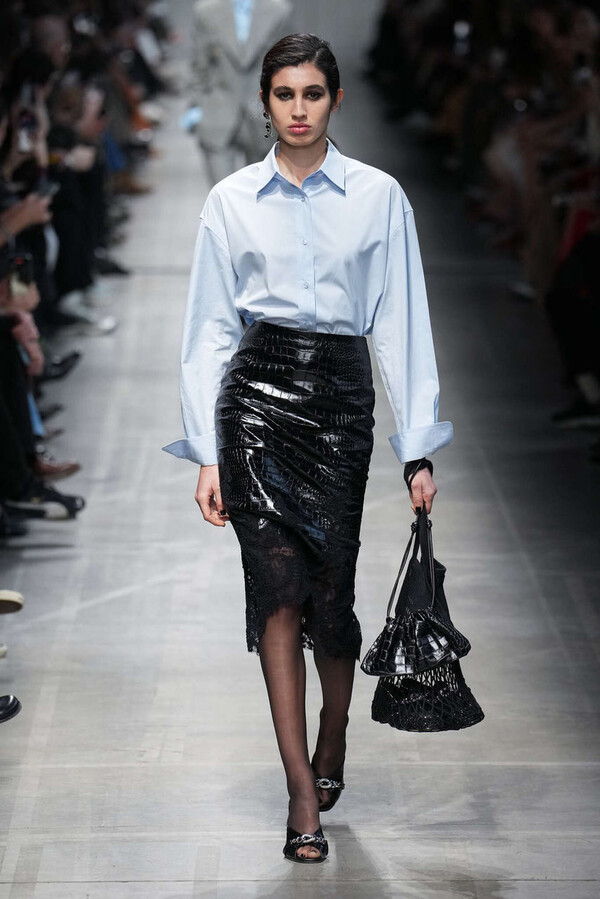
The soft Amanda bag, shaped like an inverted bucket, and the Fiocco clutch are rendered in tobacco and loden-green printed coconut, two-tone python, black astrakhan, and glittered surfaces. The same materials define the curled moccasin, the mule adorned with a satin bow, and the Texan boot that sheds its shaft to become a low-heeled pointed shoe. And finally, the mesh bag carried on the arm — like someone shopping in familiar places, not yet finished — a gesture suspended between intimacy and everyday ritual.
All images courtsey for Ermanno Scervino